Grab your coffee. Here are this week’s highlights.
🤝 COLLABORATION
Give Your AI Agent Live Web Access with Bright Data MCP
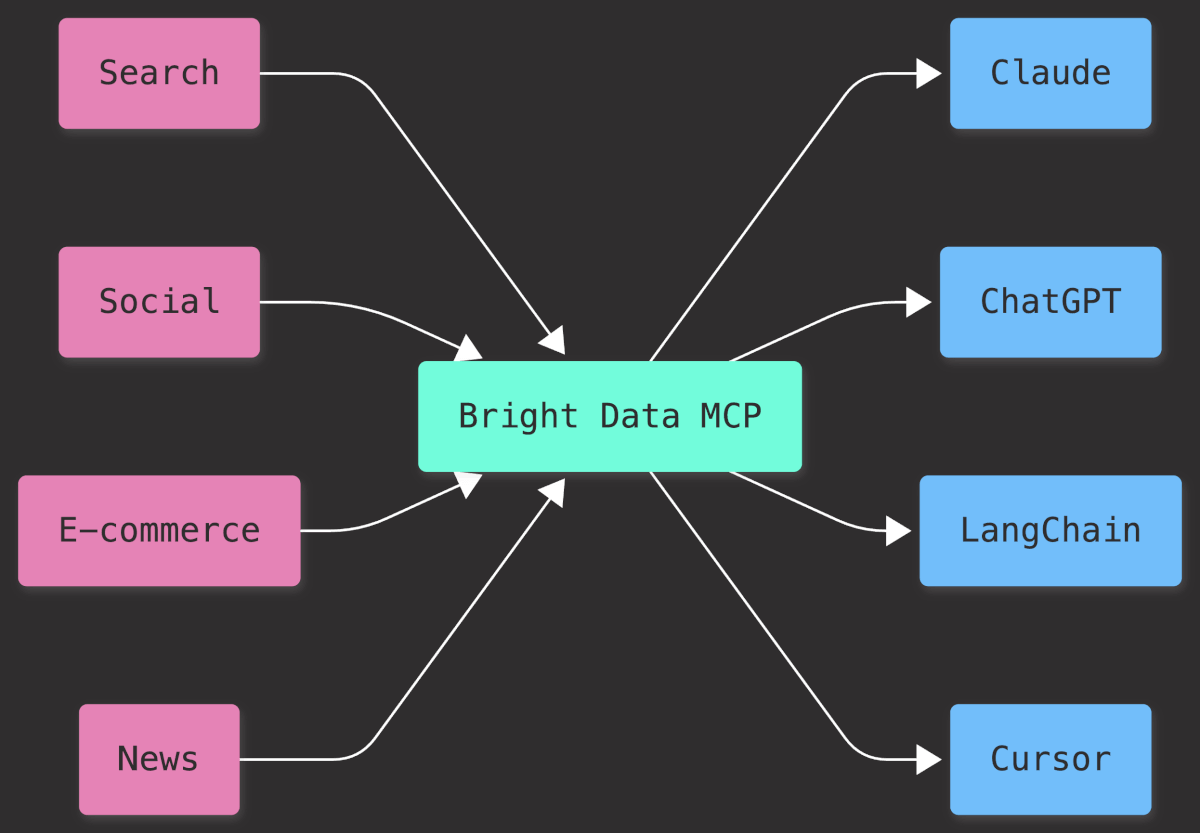
With basic search APIs, agents often miss critical context from sources like social platforms, forums, news, and answer engines. That leads to incomplete or outdated responses.
Bright Data’s MCP server unifies all web data access into one interface your AI agent can use directly.
With Bright Data MCP, your AI agent can access:
- Search engines (Google, Bing, more)
- Social media (Twitter/X, Reddit, Instagram, TikTok)
- Web archives (historical web data, years deep)
- Answer engines (ChatGPT, Perplexity, Gemini)
All through one connection.
📅 Today’s Picks
altimate-code: The Missing AI Layer for Data Engineering Teams
Problem
General AI tools can write SQL and catch obvious mistakes. But they cannot systematically detect anti-patterns, trace lineage, or keep warehouse costs under control.
That gap can lead to inefficient queries, broken dependencies, and hidden compliance risks building up over time.
Solution
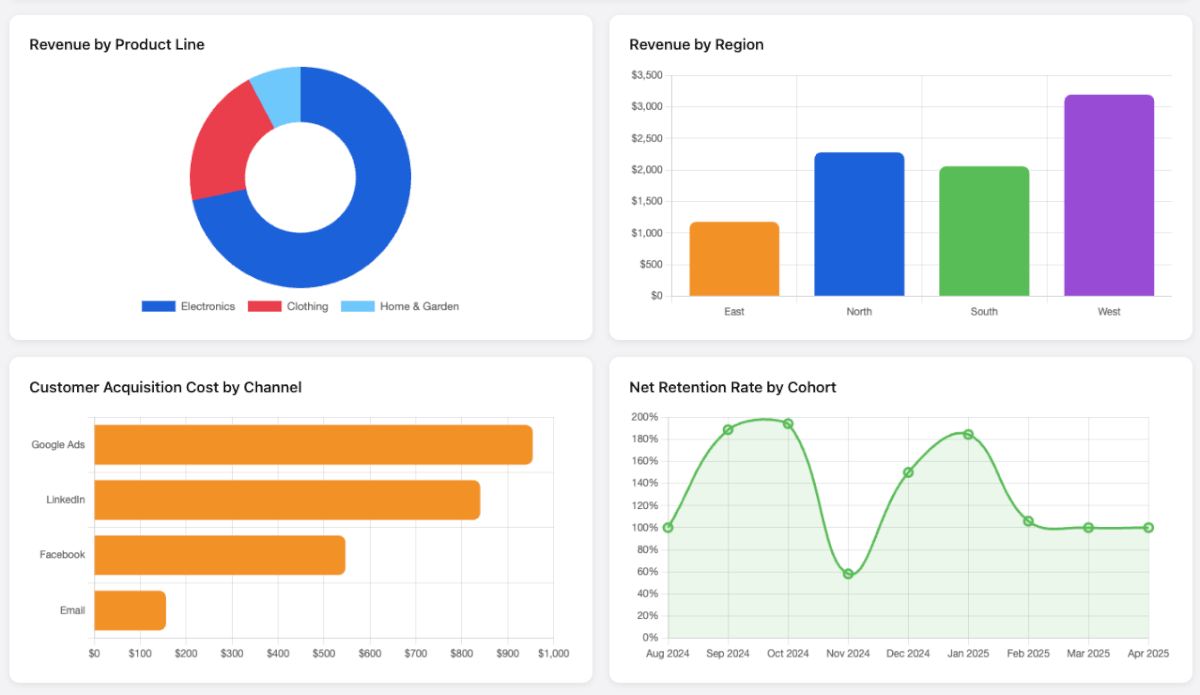
I recently tried altimate-code, an open-source agent with 100+ tools purpose-built for data engineers, and built a demo repo to test it.
From a single prompt, it generated a full dbt project with staging, intermediate, and mart layers, added automated tests, and built an interactive dashboard.
What makes it different:
- 100+ tools that analyze SQL through structural parsing, not text guessing
- Works across your stack including Snowflake, BigQuery, Databricks, DuckDB, and more
- Model-agnostic. Compatible with OpenAI, Anthropic, Gemini, Ollama, and others
Chronos: Forecast Any Time Series Without Training a Model
Problem
Traditional forecasting requires domain-specific data, feature engineering, and multiple rounds of model tuning.
Solution
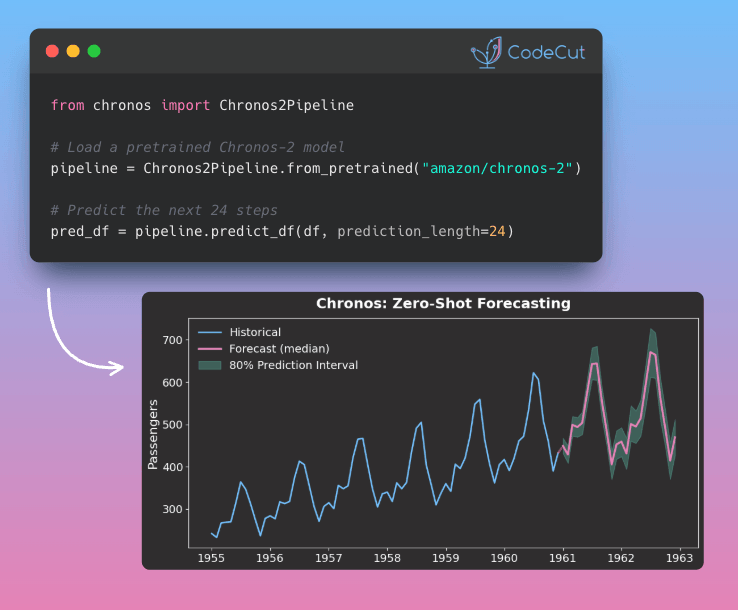
Chronos is a family of pretrained time series forecasting models from Amazon Science that deliver zero-shot predictions out of the box.
Simply load a pretrained model and generate forecasts on any time series data, with no fine-tuning required.
If zero-shot accuracy isn’t enough, you can fine-tune on your data with AutoGluon in a few lines.
📚 Latest Deep Dives
uv vs pixi: Which Python Environment Manager Should You Use for Data Science?
What if one tool could manage both your Python packages and compiled system libraries?
uv installs Python packages from PyPI, but it doesn’t support compiled C/C++ libraries.
The typical workaround is to install system libraries separately using an OS package manager, then manually align versions with your Python dependencies.
Since these system dependencies aren’t captured in project files, reproducing the environment across machines can be unreliable.
pixi solves this by managing both Python packages from PyPI and compiled system libraries from conda-forge in a single tool.
Quick comparison:
- uv: fast, reliable lockfiles, Python-only
- conda: system libraries supported, but slower and no lockfiles
- pixi: fast, unified, with system libraries, lockfiles, and a built-in task runner
In this article, I compare uv and pixi on a real ML project so you can see how they perform in practice.
☕️ Weekly Finds
timesfm [Machine Learning] – Pretrained time series foundation model by Google Research for zero-shot forecasting
darts [Machine Learning] – A Python library for user-friendly forecasting and anomaly detection on time series
orbit [Machine Learning] – A Python package for Bayesian time series forecasting with probabilistic models under the hood
Looking for a specific tool? Explore 70+ Python tools →
Stay Current with CodeCut
Actionable Python tips, curated for busy data pros. Skim in under 2 minutes, three times a week.