
Shift the Index of a DataFrame by a Specific Number of Periods
If you want to shift the index of a DataFrame by a specific number of periods, use pandas.DataFrame.shift.
Shift the Index of a DataFrame by a Specific Number of Periods Read More »

If you want to shift the index of a DataFrame by a specific number of periods, use pandas.DataFrame.shift.
Shift the Index of a DataFrame by a Specific Number of Periods Read More »
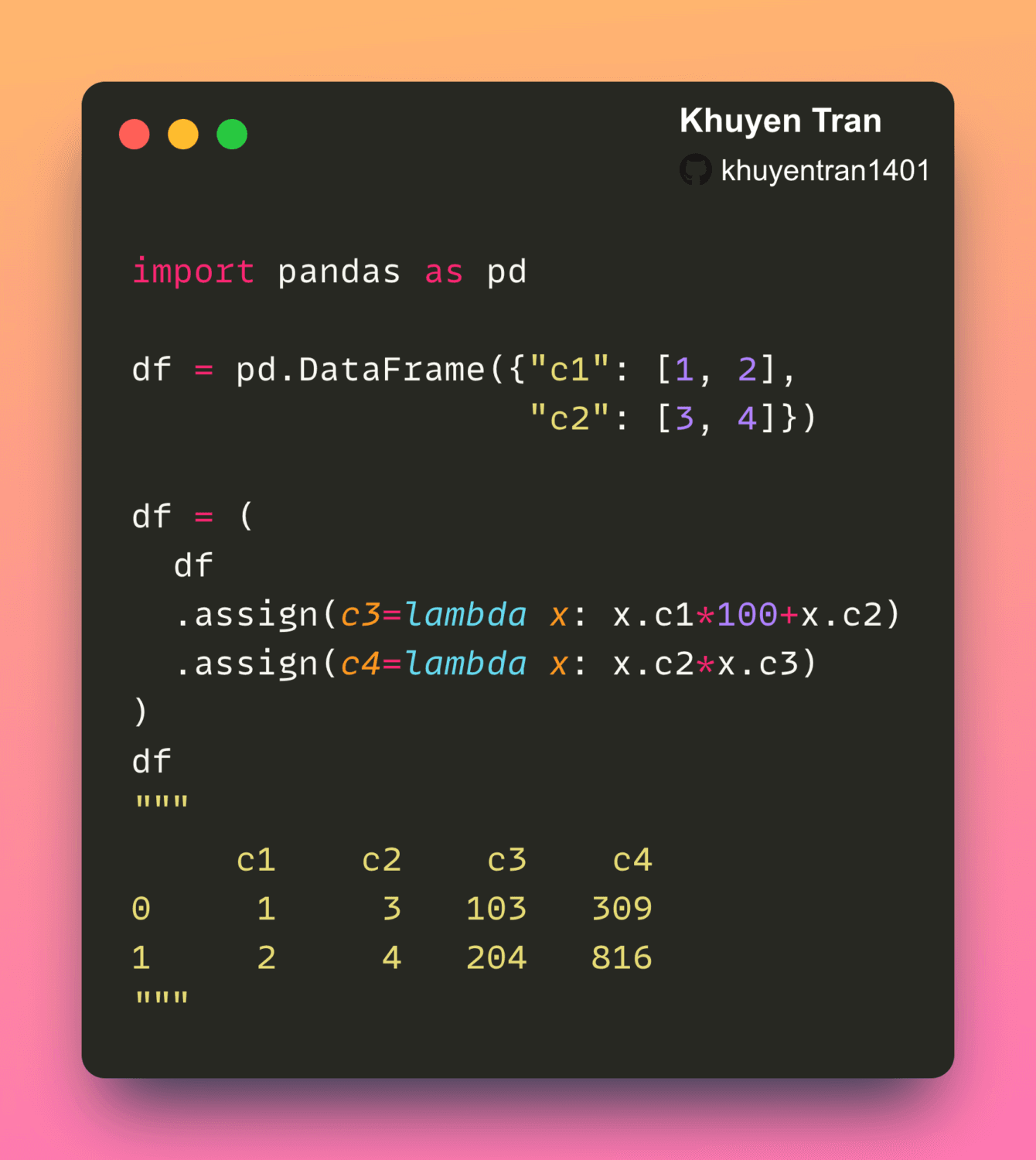
df.assign allows you to assign values to multiple new columns in one line of code.
In the code above, I first created col3 then usecol3 to create col4 in one line of code.
Assign Values to Multiple Columns in a pandas DataFrame Read More »
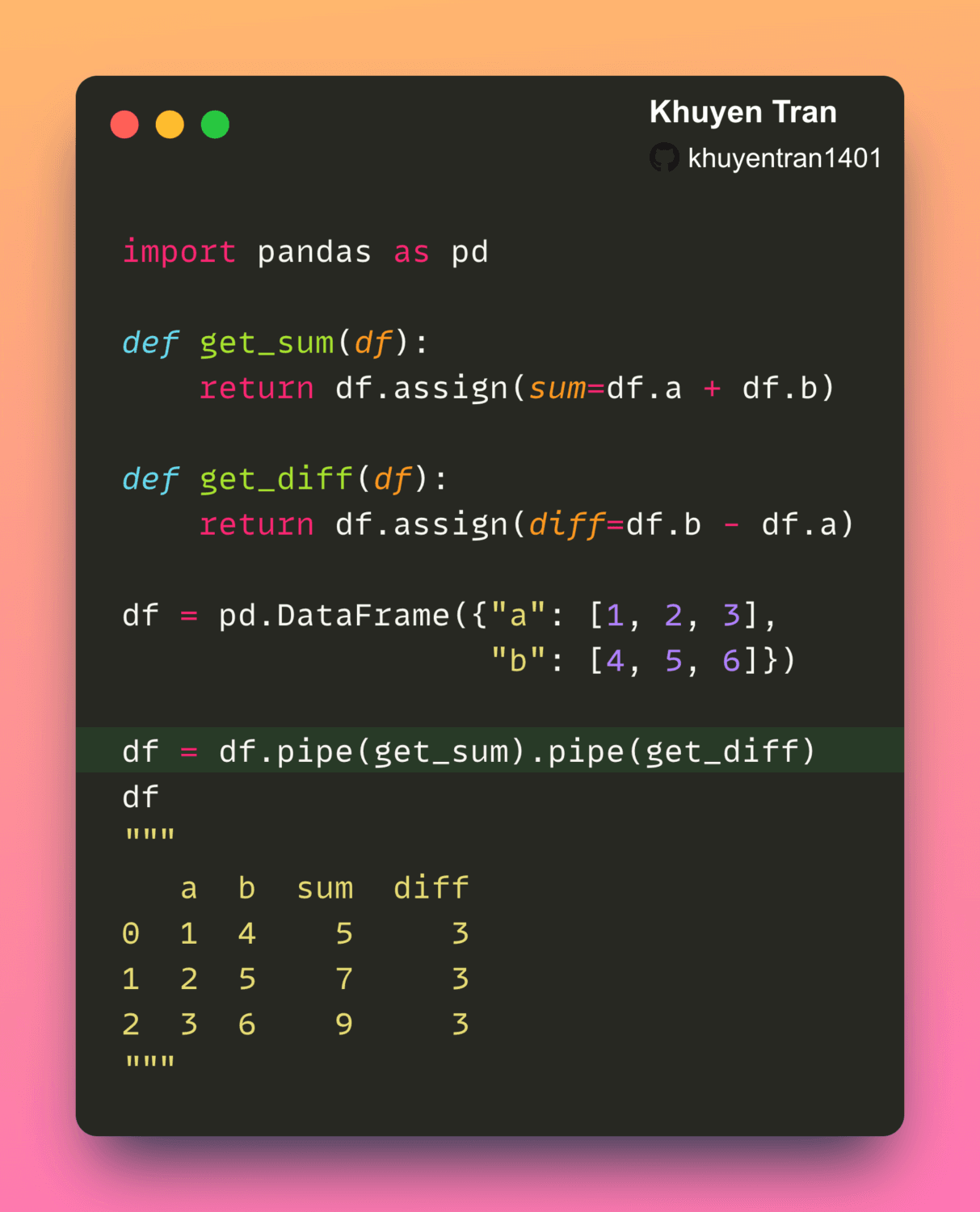
If you want to increase the readability of your code when applying multiple functions to a DataFrame, use the pipe method.
pipe: Increase the Readability when Applying Functions to a DataFrame Read More »

If you want to get the difference between rows of a pandas DataFrame, use df.diff().
Adjust the periods argument to shift more than one period for calculating the difference.
Calculate the Difference Between Rows of a pandas DataFrame Read More »
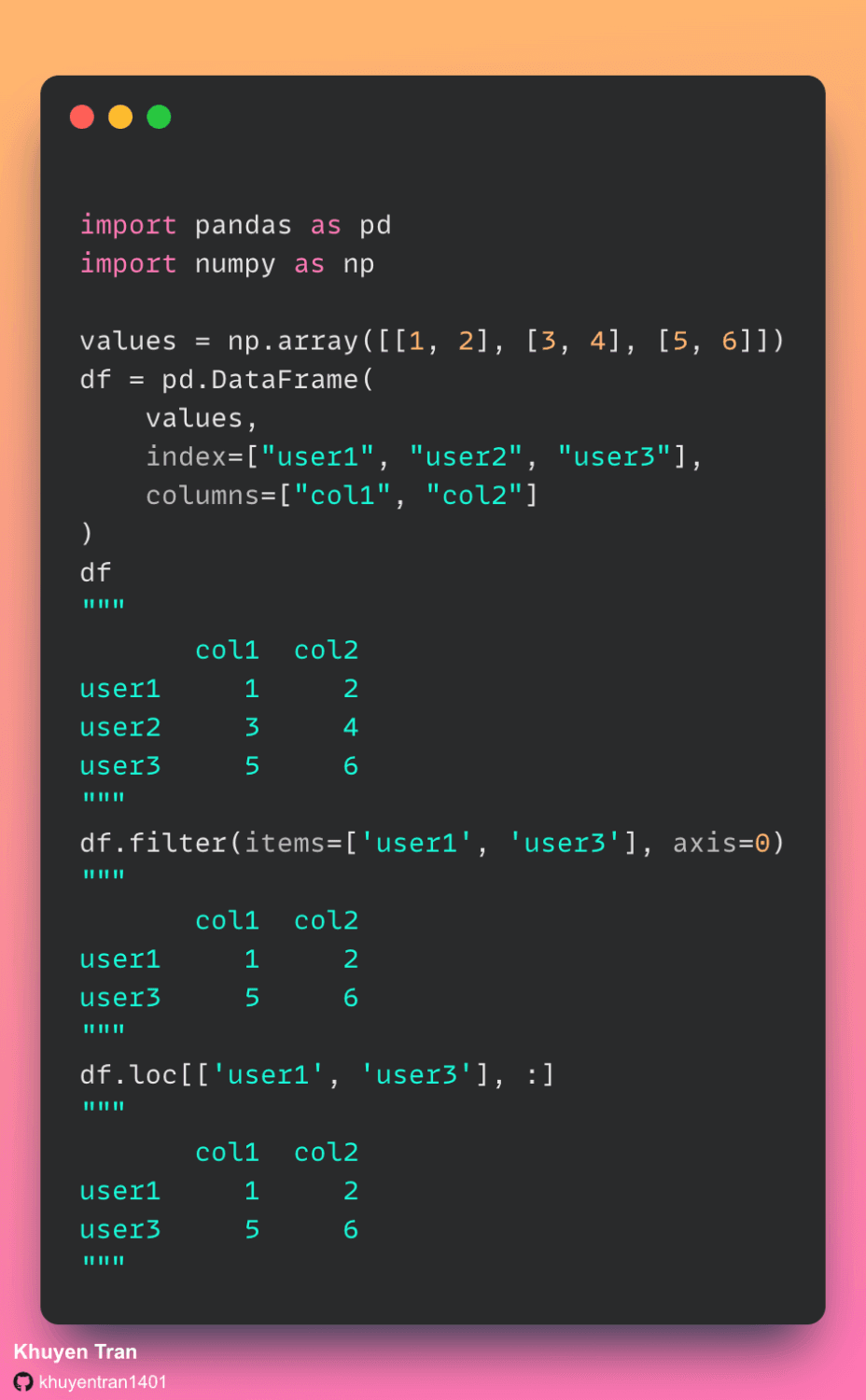
If you want to filter a pandas DataFrame based on the index’s name, you can use either filter or loc.

If you want to show and align the differences between two DataFrames, use df.compare.

If you want to get the n largest values for each category in a pandas DataFrame, use the combination of groupby and nlargest.
Get the N Largest Values for Each Category in a DataFrame Read More »

If you want to take the sum of all columns, use sum(axis=1). If you want to take the sum of all rows, use sum(axis=0).
Get the Sum of All Columns in a pandas DataFrame Read More »
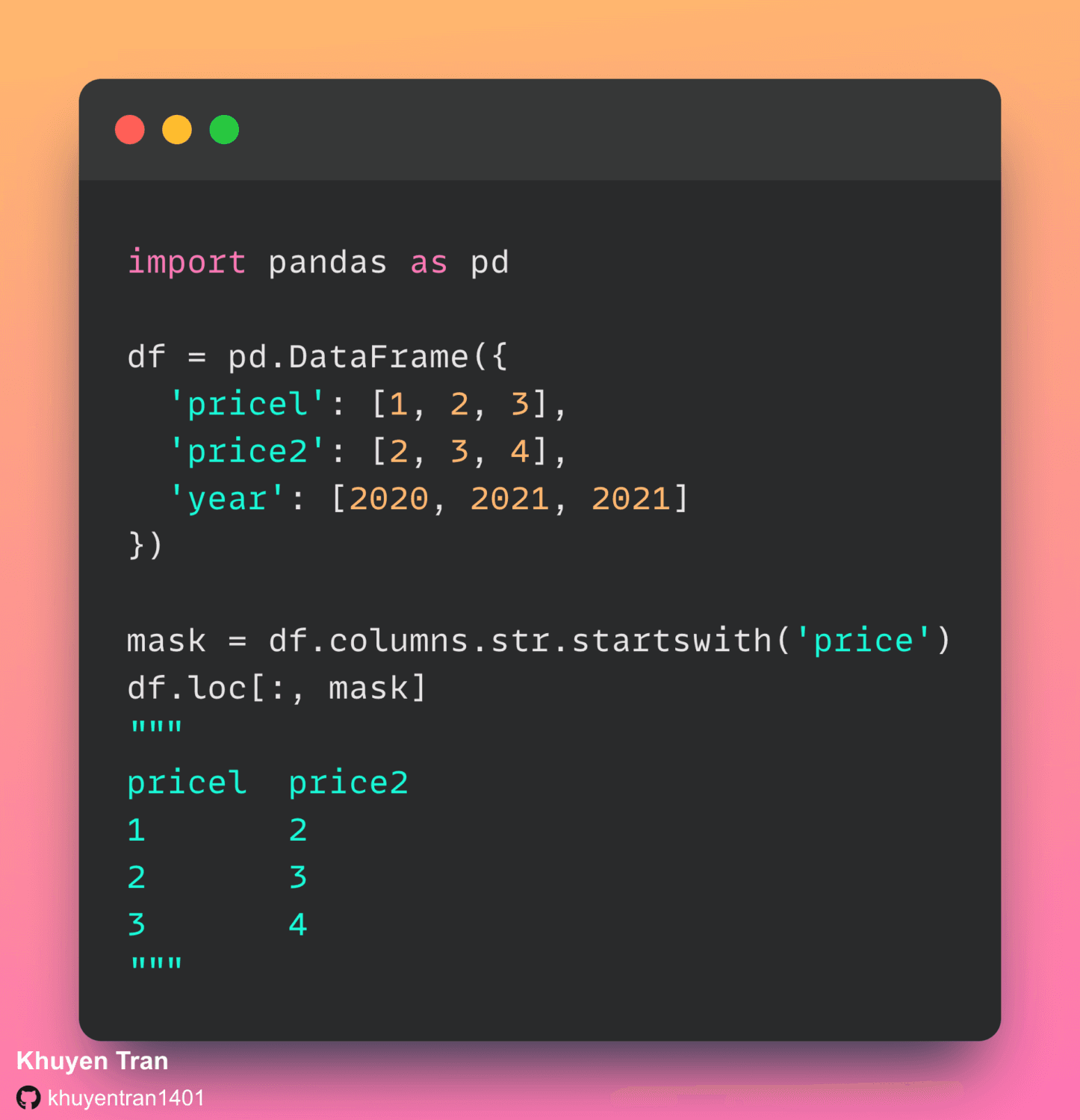
To find pandas DataFrame whose columns start with a pattern, use df.columns.str.startswith.
DataFrame.columns.str.startswith: Find DataFrame’s Columns that Start With a Pattern Read More »

There are multiple ways for you to encode a categorical column in a pandas DataFrame. If you simply want to convert each value in a column to a number, use cat.codes.