Generic selectors
Exact matches only
Search in title
Search in content
Post Type Selectors
Filter by Categories
About Article
Analyze Data
Archive
Best Practices
Better Outputs
Blog
Code Optimization
Code Quality
Command Line
Course
Daily tips
Dashboard
Data Analysis & Manipulation
Data Engineer
Data Visualization
DataFrame
Delta Lake
DevOps
DuckDB
Environment Management
Feature Engineer
Git
Jupyter Notebook
LLM
LLM Tools
Machine Learning
Machine Learning & AI
Machine Learning Tools
Manage Data
MLOps
Natural Language Processing
Newsletter Archive
NumPy
Pandas
Polars
PySpark
Python Helpers
Python Tips
Python Utilities
Scrape Data
SQL
Testing
Time Series
Tools
Visualization
Visualization & Reporting
Workflow & Automation
Workflow Automation

Time Series

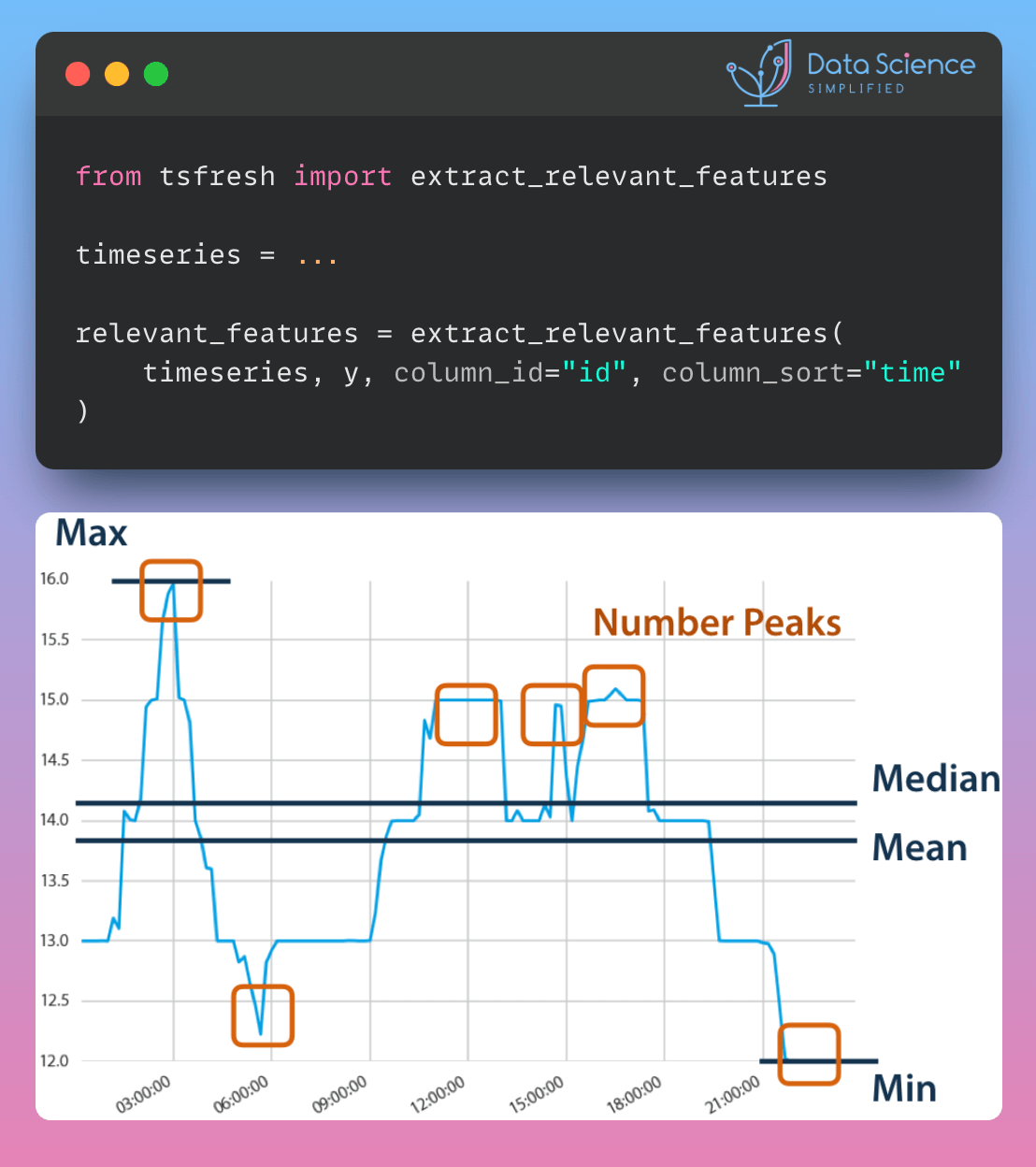
Automate Time Series Feature Engineering with tsfresh

Data scientists spend much of their time cleaning data or building features. While the former is unavoidable, the latter can be automated.

tsfresh uses a robust feature selection algorithm to automatically extract relevant time series features, freeing up data scientists’ time.

To demonstrate this, start with loading an example dataset:

from tsfresh.examples.robot_execution_failures import (
download_robot_execution_failures,
load_robot_execution_failures,
)

download_robot_execution_failures()
timeseries, y = load_robot_execution_failures()
timeseries.head()

Output:

id time F_x F_y F_z T_x T_y T_z
0 1 0 -1 -1 63 -3 -1 0
1 1 1 0 0 62 -3 -1 0
2 1 2 -1 -1 61 -3 0 0
3 1 3 -1 -1 63 -2 -1 0
4 1 4 -1 -1 63 -3 -1 0

Extract features and select only relevant features for each time series.

from tsfresh import extract_relevant_features

# extract relevant features
features_filtered = extract_relevant_features(
timeseries, y, column_id="id", column_sort="time"
)

You can now use the features in features_filtered to train your classification model.

Link to tsfresh.

Interact with this code in Google Colab.

Automate Time Series Feature Engineering with tsfresh Read More »
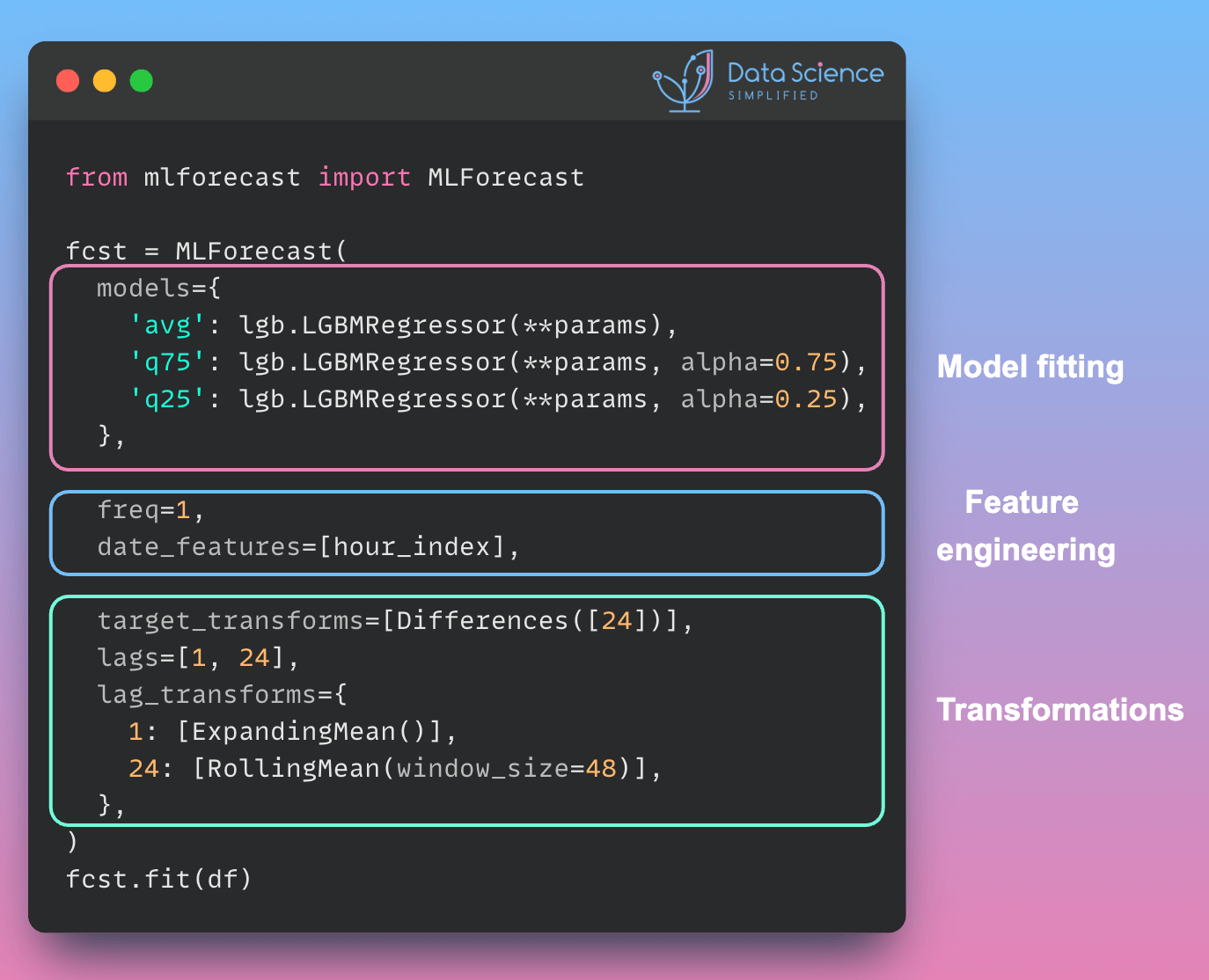
Simplify Time Series Forecasting with MLForecast’s Integrated Workflow

Traditional time series analysis separates preprocessing tasks, such as computing lags, applying transformations, and feature engineering, from the actual model fitting process, making the overall workflow more cumbersome.

In contrast, MLForecast integrates preprocessing tasks within a single class. This streamlines the workflow, enabling easy experimentation with different preprocessing and modeling combinations.

Link to MLForecast

Simplify Time Series Forecasting with MLForecast’s Integrated Workflow Read More »

NeuralForecast: Streamline Neural Forecasting with Familiar Sklearn Syntax

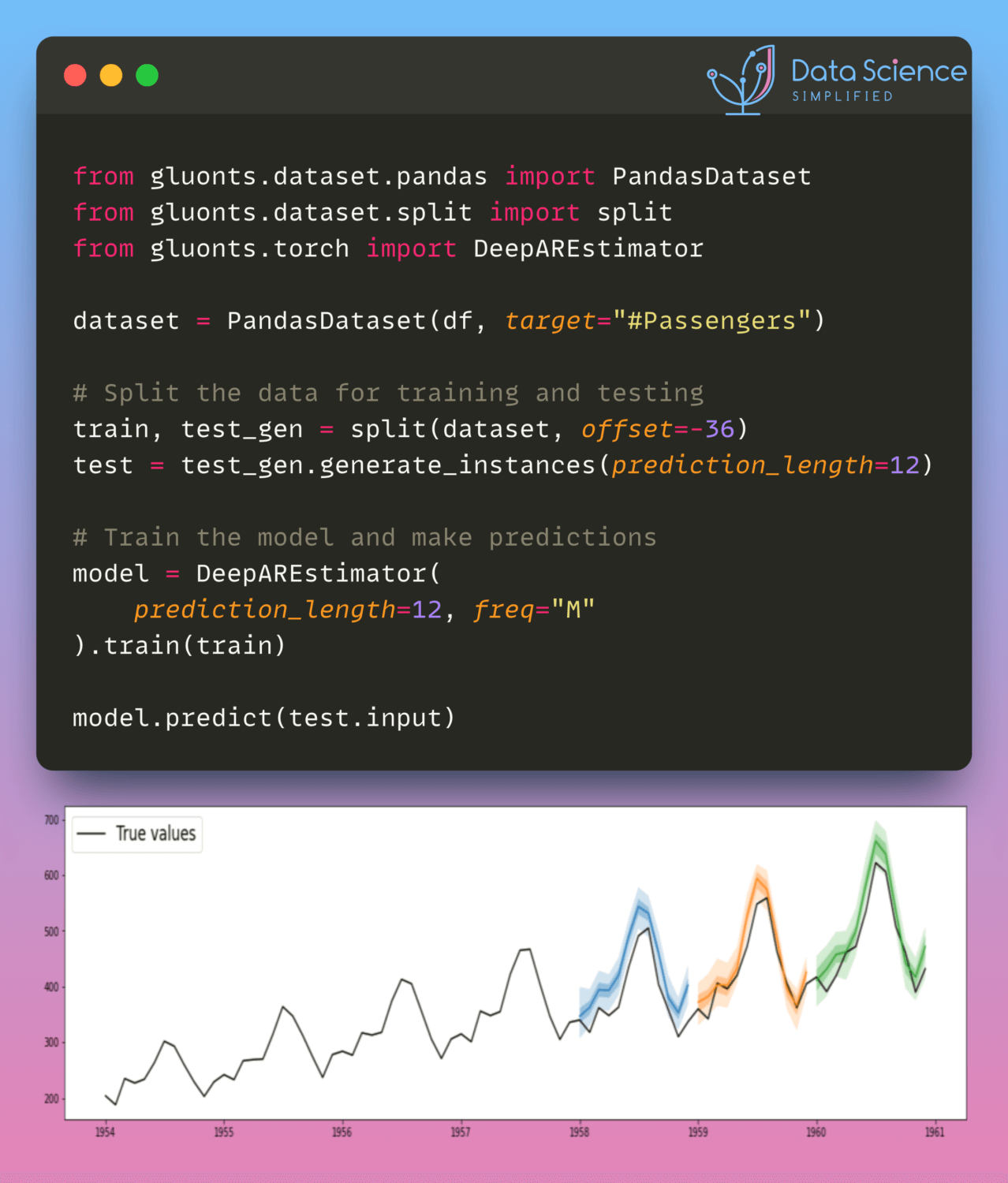
Neural forecasting methods can enhance forecasting accuracy, but they are often difficult to use and computationally expensive.

NeuralForecast provides a simple way to use efficient models, using familiar scikit-learn syntax. The models available in NeuralForecast range from classic networks like RNN to the latest transformers.

Link to NeuralForecast.

NeuralForecast: Streamline Neural Forecasting with Familiar Sklearn Syntax Read More »

LLLTime: Leveraging Language Models for Zero-Shot Time Series Forecasting

LLLTime provides a method for zero-shot time series forecasting with large language models (LLMs). By transforming numerical data into text, the model predicts future series extensions, resembling natural sentence continuation.

LLMTime can outperform many popular time-series methods without any training on the target dataset.

Link to LLLTime.

LLLTime: Leveraging Language Models for Zero-Shot Time Series Forecasting Read More »

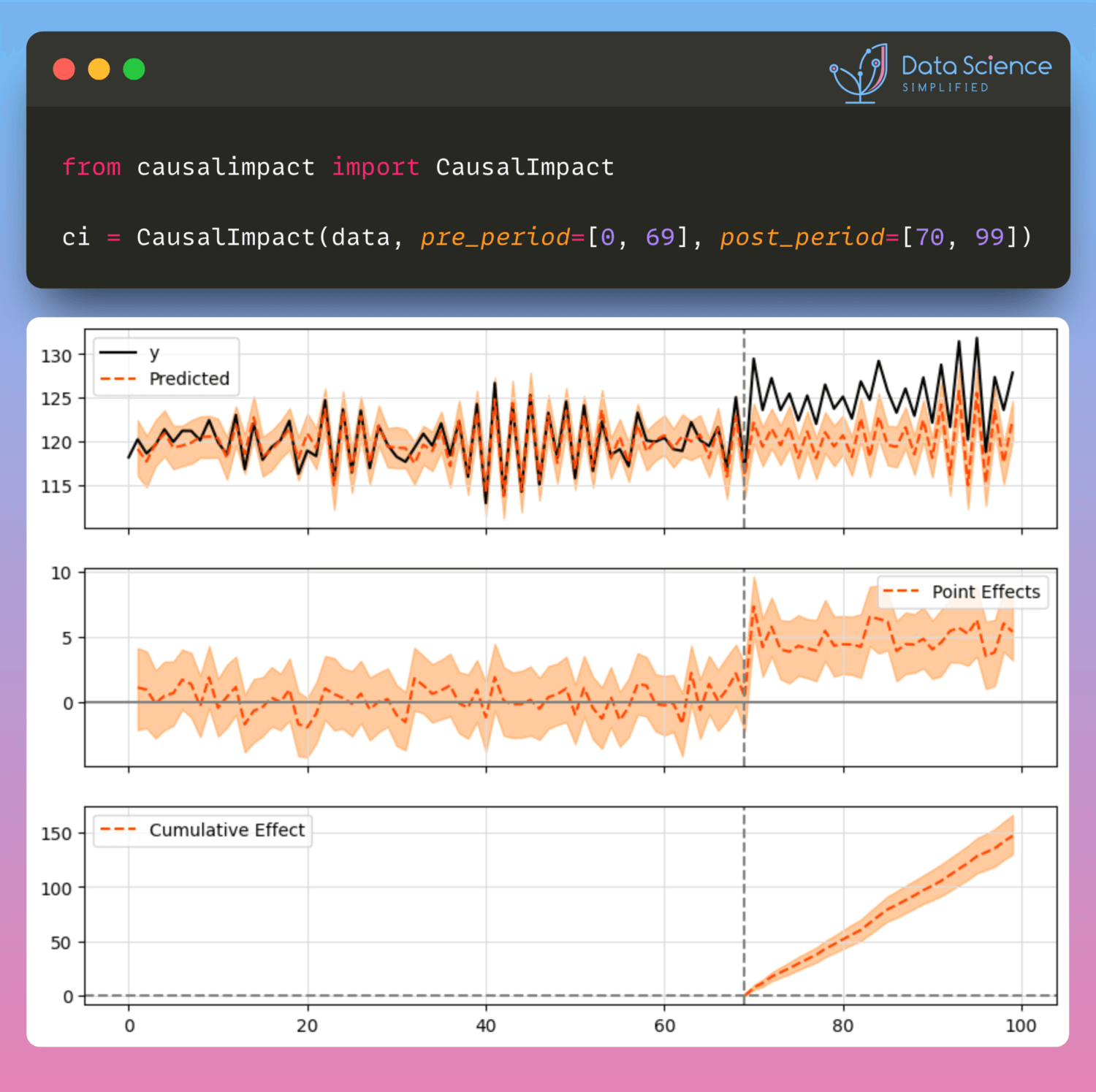
tfcausalimpact: Understand Causal Relationships in Time Series Data

You’re running a marketing campaign and see a user increase. But how do you know if it’s due to the campaign or just a coincidence?

That is when tfcausalimpact comes in handy. It forecasts future data trends using a Bayesian structural model and compares them to actual data to extract statistical conclusions.

Link to tfcausalimpact.

tfcausalimpact: Understand Causal Relationships in Time Series Data Read More »

Scroll to Top

Work with Khuyen Tran

Work with Khuyen Tran