Grab your coffee. Here are this week’s highlights.
📅 Today’s Picks
Never Use yaml.load() in Python. Here’s Why.
Problem
Has your AI assistant ever suggested yaml.load() to parse a config file?
It’s an easy mistake: yaml.load() looks like a clean way to turn YAML into a Python dict, and AI tools generate it freely because it appears in plenty of legacy code.
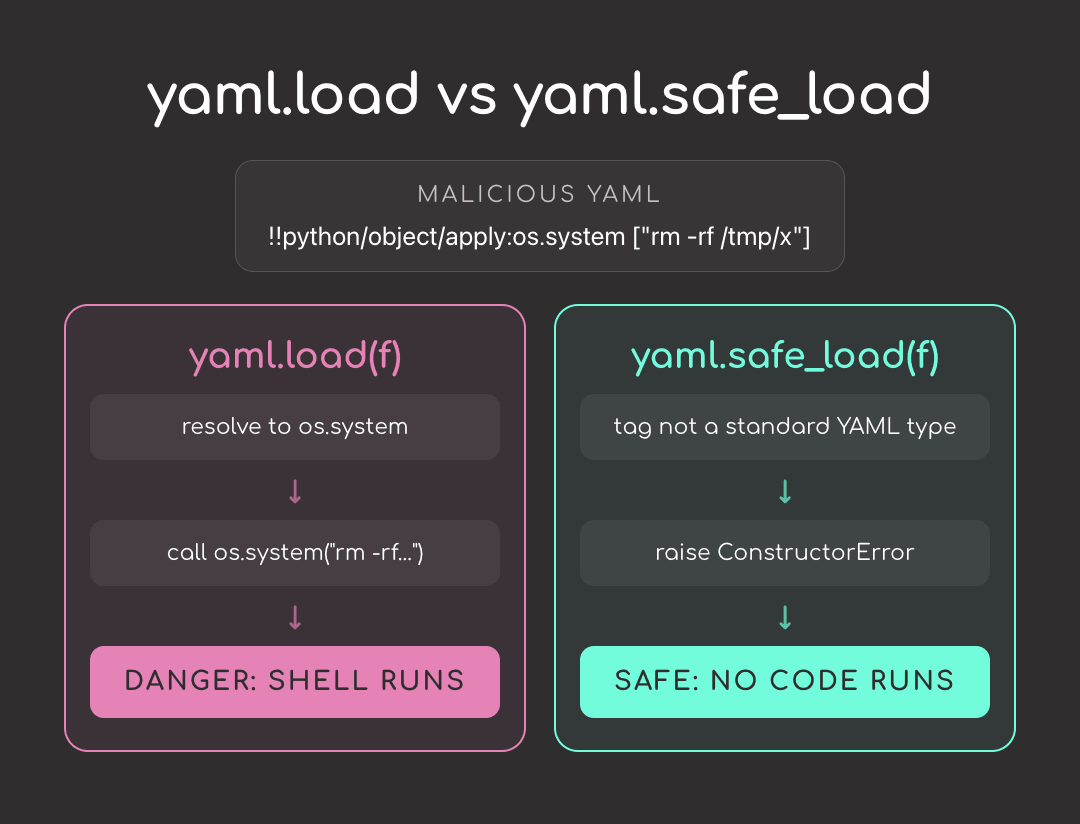
But yaml.load() can do more than parse text. It can execute Python objects embedded in the YAML, meaning anyone who controls that file could run shell commands on your machine.
Solution
Use yaml.safe_load() instead. It only supports standard YAML types like mappings, lists, strings, numbers, booleans, and null, and rejects anything that tries to execute code.
To catch unsafe yaml.load() calls automatically, scan your codebase with Bandit.
Context7: Stop AI Agents from Generating Deprecated Syntax
Problem
AI coding assistants often generate code using training data that may already be outdated.
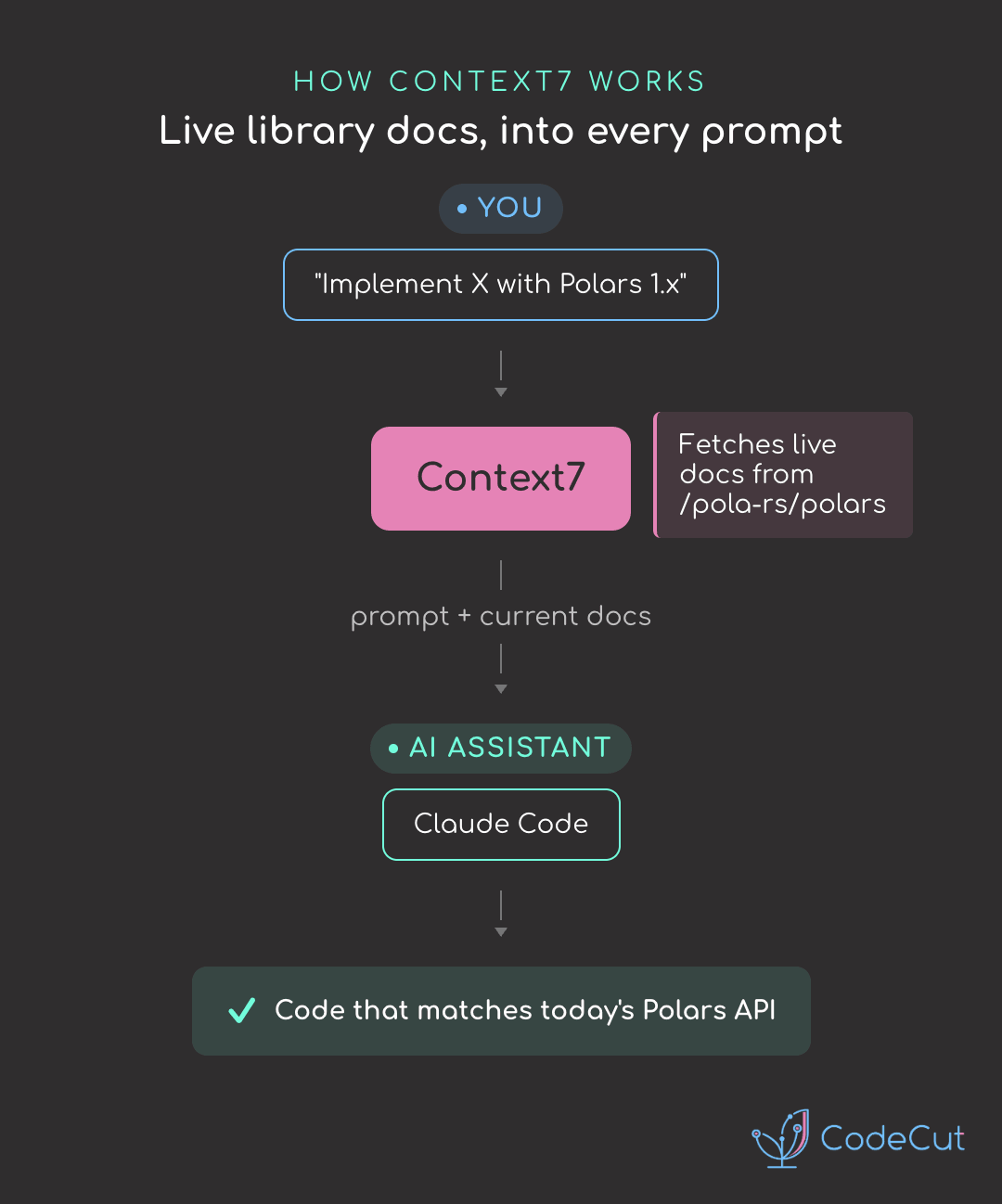
That means if you ask for Polars 1.x code, the model may still generate deprecated 0.x APIs from older training data.
Solution
Context7 solves this by pulling the latest, version-specific library docs directly into the prompt before the assistant writes any code. That way, it generates code against the API that actually exists today.
Other capabilities:
- One command sets it up across Cursor, Claude Code, Copilot, and 30+ clients
- Trigger with
use context7in any prompt - Runs as either an MCP server or a CLI + skill, so it works with or without MCP support
- Automatically loads version-matched docs like “Polars 1.0”
📚 Latest Deep Dives
Bandit: Audit AI-Generated Python for Security Flaws
LLMs have become extremely good at generating syntactically valid Python, but security quality has barely improved.
Veracode’s Spring 2026 GenAI Code Security Report found that security pass rates have remained stuck near 55% since 2024.
That gap exists because models learn from public code full of insecure patterns and reproduce them when prompted.
At the same time, reviewers usually verify whether code works, not whether it introduces vulnerabilities.
Bandit is a static analyzer for Python that identifies insecure patterns by matching code against 60+ Common Weakness Enumeration (CWE) rules.
This article walks through 8 common anti-patterns in AI-generated Python and how to fix them with Bandit.
☕️ Weekly Finds
beartype [Code Quality] – Near-real-time pure-Python runtime type-checker. Decorate a function and catch type violations the moment they happen, not after a stack trace.
vulture [Code Quality] – Find dead Python code. Scans your project for unused functions, classes, imports, and variables so you can safely delete them.
pyupgrade [Code Quality] – A tool (and pre-commit hook) that automatically upgrades Python syntax to newer language versions. Drop f-strings, dict literals, and modern type hints in one sweep.
Looking for a specific tool? Explore 70+ Python tools →
Stay Current with CodeCut
Actionable Python tips, curated for busy data pros. Skim in under 2 minutes, three times a week.