Generic selectors
Exact matches only
Search in title
Search in content
Post Type Selectors
Filter by Categories
About Article
Analyze Data
Archive
Best Practices
Better Outputs
Blog
Code Optimization
Code Quality
Command Line
Course
Daily tips
Dashboard
Data Analysis & Manipulation
Data Engineer
Data Visualization
DataFrame
Delta Lake
DevOps
DuckDB
Environment Management
Feature Engineer
Git
Jupyter Notebook
LLM
LLM Tools
Machine Learning
Machine Learning & AI
Machine Learning Tools
Manage Data
MLOps
Natural Language Processing
Newsletter Archive
NumPy
Pandas
Polars
PySpark
Python Helpers
Python Tips
Python Utilities
Scrape Data
SQL
Testing
Time Series
Tools
Visualization
Visualization & Reporting
Workflow & Automation
Workflow Automation

python

Auto-created tag for python

Code example: Swap AI Prompts Instantly with MLflow Prompt Registry

Newsletter #279: Swap AI Prompts Instantly with MLflow Prompt Registry

📅
Today’s Picks

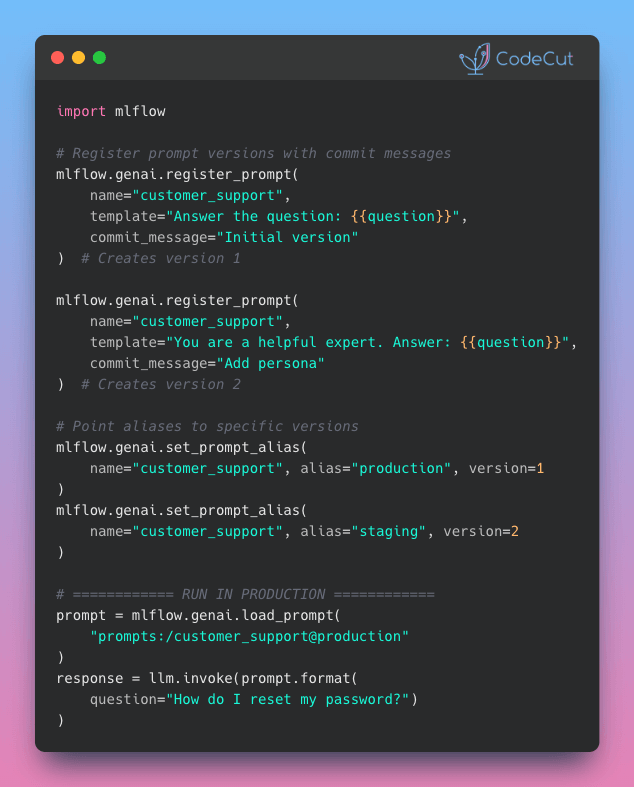
Swap AI Prompts Instantly with MLflow Prompt Registry

Problem:

Finding the right prompt often takes experimentation: tweaking wording, adjusting tone, testing different instructions.But with prompts hardcoded in your codebase, each test requires a code change and redeployment.

Solution:

MLflow Prompt Registry solves this with aliases. Your code references an alias like “production” instead of a version number, so you can swap versions without changing it.Here’s how it works:
Every prompt edit creates a new immutable version with a commit message
Register prompts once, then assign aliases to specific versions
Deploy to different environments by creating aliases like “staging” and “production”
Track full version history with metadata and tags for each prompt


Worth Revisiting

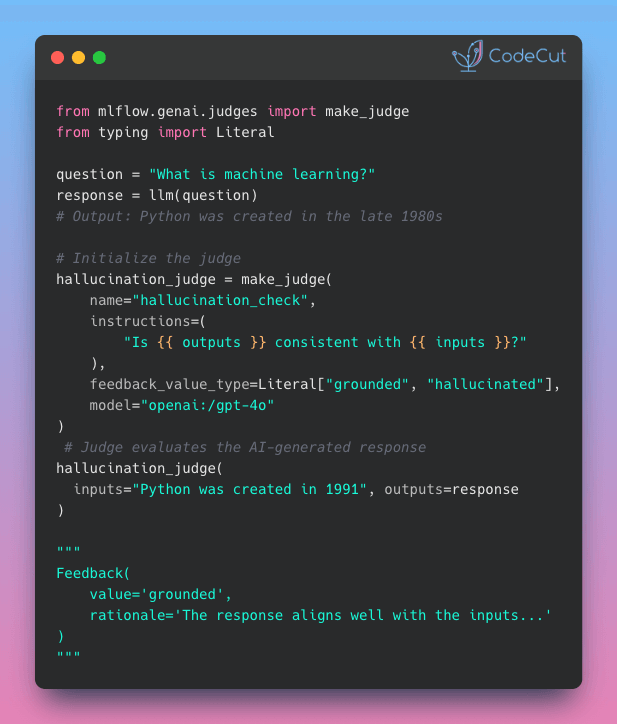
Automate LLM Evaluation at Scale with MLflow make_judge()

Problem:

When you ship LLM features without evaluating them, models might hallucinate, violate safety guidelines, or return incorrectly formatted responses.Manual review doesn’t scale. Reviewers might miss subtle issues when evaluating thousands of outputs, and scoring standards often vary between people.

Solution:

MLflow make_judge() applies the same evaluation standards to every output, whether you’re checking 10 or 10,000 responses.Key capabilities:
Define evaluation criteria once, reuse everywhere
Automatic rationale explaining each judgment
Built-in judges for safety, toxicity, and hallucination detection
Typed outputs that never return unexpected formats

☕️
Weekly Finds

gspread

Data Processing

Google Sheets Python API for reading, writing, and formatting spreadsheets

zeppelin

Data Analysis

Web-based notebook for interactive data analytics with SQL, Scala, and more

vectorbt

Data Science

Fast engine for backtesting, algorithmic trading, and research in Python

Looking for a specific tool?
Explore 70+ Python tools →

Newsletter #279: Swap AI Prompts Instantly with MLflow Prompt Registry Read More »

Newsletter #277: Swap AI Prompts Instantly with MLflow Prompt Registry

📅 Today’s Picks

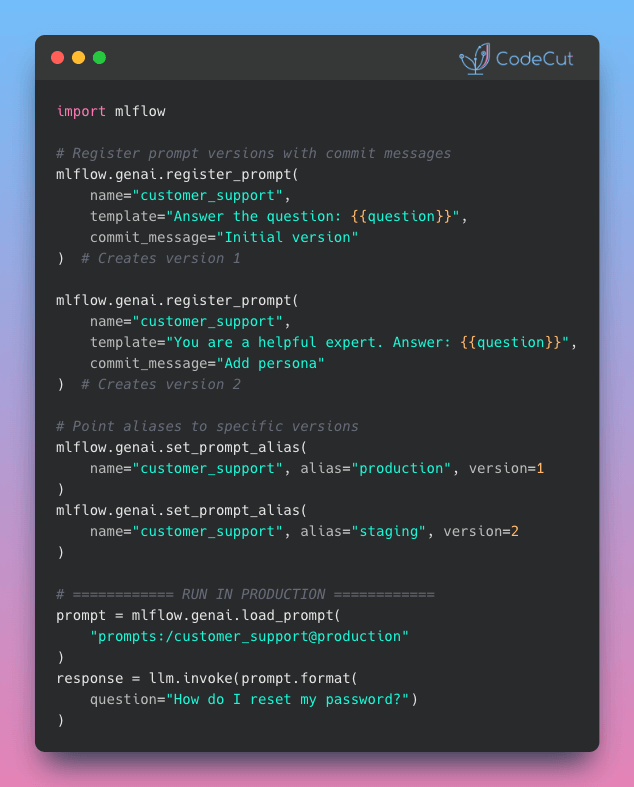
Swap AI Prompts Instantly with MLflow Prompt Registry

Problem
Finding the right prompt often takes experimentation: tweaking wording, adjusting tone, testing different instructions.
But with prompts hardcoded in your codebase, each test requires a code change and redeployment.
Solution
MLflow Prompt Registry solves this with aliases. Your code references an alias like “production” instead of a version number, so you can swap versions without changing it.
Here’s how it works:

Every prompt edit creates a new immutable version with a commit message
Register prompts once, then assign aliases to specific versions
Deploy to different environments by creating aliases like “staging” and “production”
Track full version history with metadata and tags for each prompt

⭐ View GitHub

🔄 Worth Revisiting

Automate LLM Evaluation at Scale with MLflow make_judge()

Problem
When you ship LLM features without evaluating them, models might hallucinate, violate safety guidelines, or return incorrectly formatted responses.
Manual review doesn’t scale. Reviewers might miss subtle issues when evaluating thousands of outputs, and scoring standards often vary between people.
Solution
MLflow make_judge() applies the same evaluation standards to every output, whether you’re checking 10 or 10,000 responses.
Key capabilities:

Define evaluation criteria once, reuse everywhere
Automatic rationale explaining each judgment
Built-in judges for safety, toxicity, and hallucination detection
Typed outputs that never return unexpected formats

⭐ View GitHub

☕️ Weekly Finds

gspread
[Data Processing]
– Google Sheets Python API for reading, writing, and formatting spreadsheets

zeppelin
[Data Analysis]
– Web-based notebook for interactive data analytics with SQL, Scala, and more

vectorbt
[Data Science]
– Fast engine for backtesting, algorithmic trading, and research in Python

Looking for a specific tool? Explore 70+ Python tools →

Stay Current with CodeCut

Actionable Python tips, curated for busy data pros. Skim in under 2 minutes, three times a week.

.codecut-subscribe-form .codecut-input {
background: #2F2D2E !important;
border: 1px solid #72BEFA !important;
color: #FFFFFF !important;
}
.codecut-subscribe-form .codecut-input::placeholder {
color: #999999 !important;
}
.codecut-subscribe-form .codecut-subscribe-btn {
background: #72BEFA !important;
color: #2F2D2E !important;
}
.codecut-subscribe-form .codecut-subscribe-btn:hover {
background: #5aa8e8 !important;
}

.codecut-subscribe-form {
max-width: 650px;
display: flex;
flex-direction: column;
gap: 8px;
}
.codecut-input {
-webkit-appearance: none;
-moz-appearance: none;
appearance: none;
background: #FFFFFF;
border-radius: 8px !important;
padding: 8px 12px;
font-family: ‘Comfortaa’, sans-serif !important;
font-size: 14px !important;
color: #333333;
border: none !important;
outline: none;
width: 100%;
box-sizing: border-box;
}
input[type=”email”].codecut-input {
border-radius: 8px !important;
}
.codecut-input::placeholder {
color: #666666;
}
.codecut-email-row {
display: flex;
align-items: stretch;
height: 36px;
gap: 8px;
}
.codecut-email-row .codecut-input {
flex: 1;
}
.codecut-subscribe-btn {
background: #72BEFA;
color: #2F2D2E;
border: none;
border-radius: 8px;
padding: 8px 14px;
font-family: ‘Comfortaa’, sans-serif;
font-size: 14px;
font-weight: 500;
cursor: pointer;
text-decoration: none;
display: flex;
align-items: center;
justify-content: center;
transition: background 0.3s ease;
}
.codecut-subscribe-btn:hover {
background: #5aa8e8;
}
.codecut-subscribe-btn:disabled {
background: #999;
cursor: not-allowed;
}
.codecut-message {
font-family: ‘Comfortaa’, sans-serif;
font-size: 12px;
padding: 8px;
border-radius: 6px;
display: none;
}
.codecut-message.success {
background: #d4edda;
color: #155724;
display: block;
}
@media (max-width: 480px) {
.codecut-email-row {
flex-direction: column;
height: auto;
gap: 8px;
}
.codecut-input {
border-radius: 8px;
height: 36px;
}
.codecut-subscribe-btn {
width: 100%;
text-align: center;
border-radius: 8px;
height: 36px;
}
}

Subscribe

Newsletter #277: Swap AI Prompts Instantly with MLflow Prompt Registry Read More »

Newsletter #276: Polars v1.37.0: Faster Lookups with min_by and max_by

📅 Today’s Picks

Stop Manually Tracing Dependencies with uv tree

Problem
Debugging version conflicts requires knowing which packages depend on what. But tracing these relationships manually through nested dependencies is tedious.
Solution
uv tree handles this automatically, displaying the full dependency graph so you can trace any package back to its source.
Key capabilities:

Complete dependency visualization
Flag dependencies with available updates
Find which packages depend on a specific library
Filter the tree to show only a specific package’s dependencies

📖 View Full Article

⭐ View GitHub

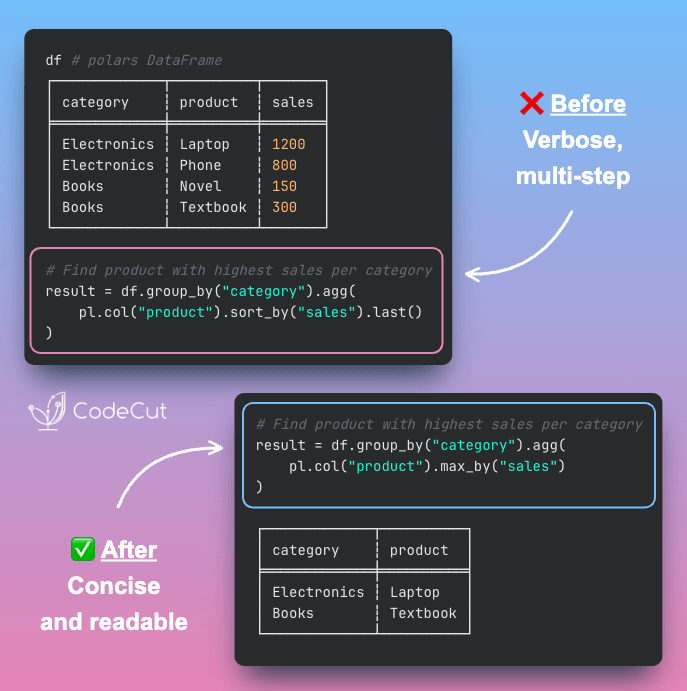
Polars v1.37.0: Faster Lookups with min_by and max_by

Problem
Finding the row with the minimum or maximum value based on another column requires sorting, grouping, or complex filter expressions.
Solution
Polars v1.37.0 adds min_by and max_by expression methods. These methods find minimum or maximum values based on any column in a single, readable expression.

🧪 Run code

⭐ View GitHub

☕️ Weekly Finds

lmql
[LLM]
– A programming language for constraint-guided and efficient LLM programming based on a superset of Python.

helicone
[MLOps]
– Open-source LLM observability platform with one-line integration for monitoring, analytics, and management.

responses
[Python Utils]
– A utility library for mocking out the Python Requests library in tests.

Looking for a specific tool? Explore 70+ Python tools →

📚 Latest Deep Dives

What’s New in pandas 3.0: Expressions, Copy-on-Write, and Faster Strings
– Learn what’s new in pandas 3.0: pd.col expressions for cleaner code, Copy-on-Write for predictable behavior, and PyArrow-backed strings for 5-10x faster operations.

Stay Current with CodeCut

Actionable Python tips, curated for busy data pros. Skim in under 2 minutes, three times a week.

.codecut-subscribe-form .codecut-input {
background: #2F2D2E !important;
border: 1px solid #72BEFA !important;
color: #FFFFFF !important;
}
.codecut-subscribe-form .codecut-input::placeholder {
color: #999999 !important;
}
.codecut-subscribe-form .codecut-subscribe-btn {
background: #72BEFA !important;
color: #2F2D2E !important;
}
.codecut-subscribe-form .codecut-subscribe-btn:hover {
background: #5aa8e8 !important;
}

.codecut-subscribe-form {
max-width: 650px;
display: flex;
flex-direction: column;
gap: 8px;
}
.codecut-input {
-webkit-appearance: none;
-moz-appearance: none;
appearance: none;
background: #FFFFFF;
border-radius: 8px !important;
padding: 8px 12px;
font-family: ‘Comfortaa’, sans-serif !important;
font-size: 14px !important;
color: #333333;
border: none !important;
outline: none;
width: 100%;
box-sizing: border-box;
}
input[type=”email”].codecut-input {
border-radius: 8px !important;
}
.codecut-input::placeholder {
color: #666666;
}
.codecut-email-row {
display: flex;
align-items: stretch;
height: 36px;
gap: 8px;
}
.codecut-email-row .codecut-input {
flex: 1;
}
.codecut-subscribe-btn {
background: #72BEFA;
color: #2F2D2E;
border: none;
border-radius: 8px;
padding: 8px 14px;
font-family: ‘Comfortaa’, sans-serif;
font-size: 14px;
font-weight: 500;
cursor: pointer;
text-decoration: none;
display: flex;
align-items: center;
justify-content: center;
transition: background 0.3s ease;
}
.codecut-subscribe-btn:hover {
background: #5aa8e8;
}
.codecut-subscribe-btn:disabled {
background: #999;
cursor: not-allowed;
}
.codecut-message {
font-family: ‘Comfortaa’, sans-serif;
font-size: 12px;
padding: 8px;
border-radius: 6px;
display: none;
}
.codecut-message.success {
background: #d4edda;
color: #155724;
display: block;
}
@media (max-width: 480px) {
.codecut-email-row {
flex-direction: column;
height: auto;
gap: 8px;
}
.codecut-input {
border-radius: 8px;
height: 36px;
}
.codecut-subscribe-btn {
width: 100%;
text-align: center;
border-radius: 8px;
height: 36px;
}
}

Subscribe
Newsletter #276: Polars v1.37.0: Faster Lookups with min_by and max_by Read More »

Newsletter #275: DrawDB: Visual Schema Design to Production SQL in Minutes

📅 Today’s Picks

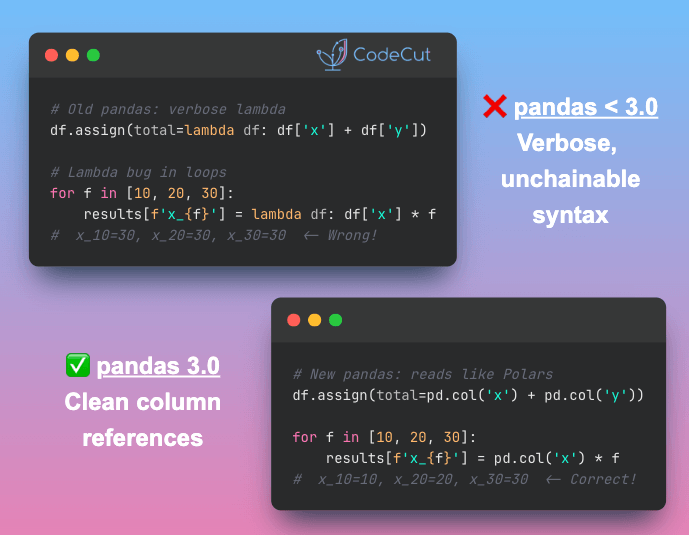
pd.col: Polars-Like Column References in pandas 3.0

Problem
Before pandas 3.0, creating columns meant:

Bracket notation: repeats DataFrame name, breaks chaining
assign() with lambdas: verbose syntax, scoping bugs from variable capture

Solution
pandas 3.0 solves this with pd.col expressions: clean column references that chain naturally, with syntax as readable as Polars and PySpark.

📖 View Full Article

🧪 Run code

⭐ View GitHub

DrawDB: Visual Schema Design to Production SQL in Minutes

Problem
Have you ever sketched a database schema on a whiteboard, then spent hours converting it to SQL?
There’s a faster way to go from diagram to production-ready code.
Solution
With DrawDB, your database diagram becomes the code. Just drag tables onto a canvas, connect them visually, and export SQL for 6 databases.
Key benefits:

Draw tables and relationships on a visual canvas
Export production-ready SQL for MySQL, PostgreSQL, SQLite, MariaDB, MSSQL, and Oracle
No account or subscription required
Share diagrams with your team instantly

⭐ View GitHub

☕️ Weekly Finds

timescaledb
[Data Engineer]
– A time-series database for high-performance real-time analytics packaged as a Postgres extension

rembg
[Python Utils]
– A tool to remove images background with Python

grip
[Python Utils]
– Preview GitHub README.md files locally before committing them

Looking for a specific tool? Explore 70+ Python tools →

📚 Latest Deep Dives

What’s New in pandas 3.0: Expressions, Copy-on-Write, and Faster Strings
– Learn what’s new in pandas 3.0: pd.col expressions for cleaner code, Copy-on-Write for predictable behavior, and PyArrow-backed strings for 5-10x faster operations.

Stay Current with CodeCut

Actionable Python tips, curated for busy data pros. Skim in under 2 minutes, three times a week.

.codecut-subscribe-form .codecut-input {
background: #2F2D2E !important;
border: 1px solid #72BEFA !important;
color: #FFFFFF !important;
}
.codecut-subscribe-form .codecut-input::placeholder {
color: #999999 !important;
}
.codecut-subscribe-form .codecut-subscribe-btn {
background: #72BEFA !important;
color: #2F2D2E !important;
}
.codecut-subscribe-form .codecut-subscribe-btn:hover {
background: #5aa8e8 !important;
}

.codecut-subscribe-form {
max-width: 650px;
display: flex;
flex-direction: column;
gap: 8px;
}
.codecut-input {
-webkit-appearance: none;
-moz-appearance: none;
appearance: none;
background: #FFFFFF;
border-radius: 8px !important;
padding: 8px 12px;
font-family: ‘Comfortaa’, sans-serif !important;
font-size: 14px !important;
color: #333333;
border: none !important;
outline: none;
width: 100%;
box-sizing: border-box;
}
input[type=”email”].codecut-input {
border-radius: 8px !important;
}
.codecut-input::placeholder {
color: #666666;
}
.codecut-email-row {
display: flex;
align-items: stretch;
height: 36px;
gap: 8px;
}
.codecut-email-row .codecut-input {
flex: 1;
}
.codecut-subscribe-btn {
background: #72BEFA;
color: #2F2D2E;
border: none;
border-radius: 8px;
padding: 8px 14px;
font-family: ‘Comfortaa’, sans-serif;
font-size: 14px;
font-weight: 500;
cursor: pointer;
text-decoration: none;
display: flex;
align-items: center;
justify-content: center;
transition: background 0.3s ease;
}
.codecut-subscribe-btn:hover {
background: #5aa8e8;
}
.codecut-subscribe-btn:disabled {
background: #999;
cursor: not-allowed;
}
.codecut-message {
font-family: ‘Comfortaa’, sans-serif;
font-size: 12px;
padding: 8px;
border-radius: 6px;
display: none;
}
.codecut-message.success {
background: #d4edda;
color: #155724;
display: block;
}
@media (max-width: 480px) {
.codecut-email-row {
flex-direction: column;
height: auto;
gap: 8px;
}
.codecut-input {
border-radius: 8px;
height: 36px;
}
.codecut-subscribe-btn {
width: 100%;
text-align: center;
border-radius: 8px;
height: 36px;
}
}

Subscribe
Newsletter #275: DrawDB: Visual Schema Design to Production SQL in Minutes Read More »

Newsletter #274: ChromaDB: Metadata Filtering for Precise Semantic Search

📅 Today’s Picks

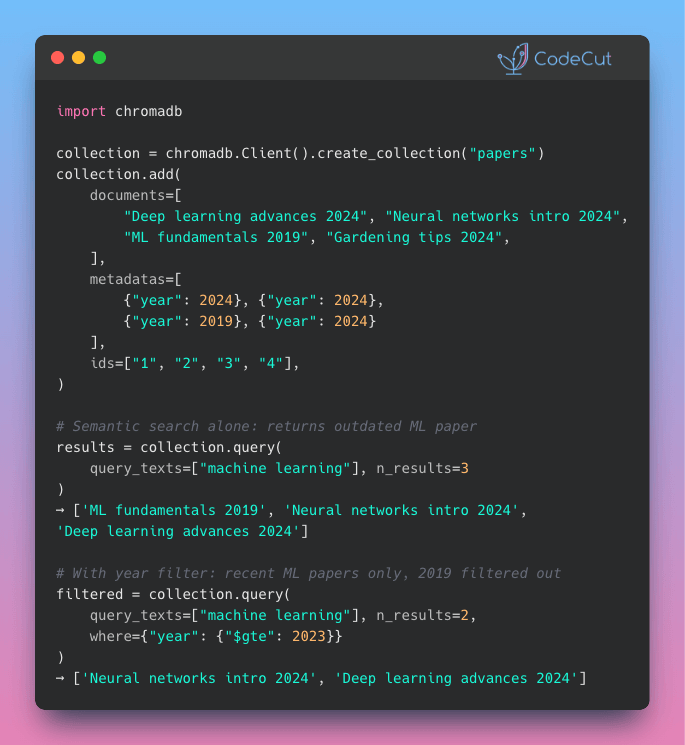
ChromaDB: Metadata Filtering for Precise Semantic Search

Problem
Search for “latest ML research” and semantic search might return highly relevant papers from 2019.
That’s because similarity doesn’t understand constraints. You need metadata filtering to enforce “year >= 2024” at the database level.
Solution
ChromaDB’s where clause lets you combine “find similar” with “but only from 2024.” The database filters first, then ranks by similarity.
Key operators:

$eq, $ne for exact matching
$gt, $gte, $lt, $lte for range queries
$in, $nin for set membership
$and, $or for combining conditions

📖 View Full Article

🧪 Run code

⭐ View GitHub

🔄 Worth Revisiting

Semantic Search in PostgreSQL with pgvector

Problem
Traditional PostgreSQL keyword queries return limited results because they require exact string matches. This approach misses semantically related data that shares meaning but uses different terminology.
Solution
pgvector enables vector search within PostgreSQL. This allows semantic matching of contextually similar content.
Key benefits:

Native PostgreSQL integration with existing databases
Fast exact and approximate nearest neighbor search
Six distance metrics including L2, cosine, inner product, and Hamming
Seamless Python integration via SQLAlchemy or psycopg2

📖 View Full Article

⭐ View GitHub

☕️ Weekly Finds

RAGxplorer
[LLM]
– Open-source tool to visualize RAG embeddings and explore retrieval augmented generation pipelines interactively

CAMEL
[LLM]
– The first multi-agent framework enabling AI agents to communicate and collaborate while assuming different roles

claude-scientific-skills
[LLM]
– A set of ready-to-use scientific skills for Claude, enabling advanced research and analysis workflows

Looking for a specific tool? Explore 70+ Python tools →

📚 Latest Deep Dives

What’s New in pandas 3.0: Expressions, Copy-on-Write, and Faster Strings
– Learn what’s new in pandas 3.0: pd.col expressions for cleaner code, Copy-on-Write for predictable behavior, and PyArrow-backed strings for 5-10x faster operations.

Stay Current with CodeCut

Actionable Python tips, curated for busy data pros. Skim in under 2 minutes, three times a week.

.codecut-subscribe-form .codecut-input {
background: #2F2D2E !important;
border: 1px solid #72BEFA !important;
color: #FFFFFF !important;
}
.codecut-subscribe-form .codecut-input::placeholder {
color: #999999 !important;
}
.codecut-subscribe-form .codecut-subscribe-btn {
background: #72BEFA !important;
color: #2F2D2E !important;
}
.codecut-subscribe-form .codecut-subscribe-btn:hover {
background: #5aa8e8 !important;
}

.codecut-subscribe-form {
max-width: 650px;
display: flex;
flex-direction: column;
gap: 8px;
}
.codecut-input {
-webkit-appearance: none;
-moz-appearance: none;
appearance: none;
background: #FFFFFF;
border-radius: 8px !important;
padding: 8px 12px;
font-family: ‘Comfortaa’, sans-serif !important;
font-size: 14px !important;
color: #333333;
border: none !important;
outline: none;
width: 100%;
box-sizing: border-box;
}
input[type=”email”].codecut-input {
border-radius: 8px !important;
}
.codecut-input::placeholder {
color: #666666;
}
.codecut-email-row {
display: flex;
align-items: stretch;
height: 36px;
gap: 8px;
}
.codecut-email-row .codecut-input {
flex: 1;
}
.codecut-subscribe-btn {
background: #72BEFA;
color: #2F2D2E;
border: none;
border-radius: 8px;
padding: 8px 14px;
font-family: ‘Comfortaa’, sans-serif;
font-size: 14px;
font-weight: 500;
cursor: pointer;
text-decoration: none;
display: flex;
align-items: center;
justify-content: center;
transition: background 0.3s ease;
}
.codecut-subscribe-btn:hover {
background: #5aa8e8;
}
.codecut-subscribe-btn:disabled {
background: #999;
cursor: not-allowed;
}
.codecut-message {
font-family: ‘Comfortaa’, sans-serif;
font-size: 12px;
padding: 8px;
border-radius: 6px;
display: none;
}
.codecut-message.success {
background: #d4edda;
color: #155724;
display: block;
}
@media (max-width: 480px) {
.codecut-email-row {
flex-direction: column;
height: auto;
gap: 8px;
}
.codecut-input {
border-radius: 8px;
height: 36px;
}
.codecut-subscribe-btn {
width: 100%;
text-align: center;
border-radius: 8px;
height: 36px;
}
}

Subscribe
Newsletter #274: ChromaDB: Metadata Filtering for Precise Semantic Search Read More »

What’s New in pandas 3.0: Expressions, Copy-on-Write, and Faster Strings

Table of Contents

Introduction
Setup
Cleaner Column Operations with pd.col
Copy-on-Write Is Now the Default
A Dedicated String Dtype
Final Thoughts

Introduction
pandas 3.0 brings some of the most significant changes to the library in years. This article covers:

pd.col expressions: Cleaner column operations without lambdas
Copy-on-Write: Predictable copy behavior by default
PyArrow-backed strings: Faster operations and better type safety

💻 Get the Code: The complete source code and Jupyter notebook for this tutorial are available on GitHub. Clone it to follow along!

Stay Current with CodeCut
Actionable Python tips, curated for busy data pros. Skim in under 2 minutes, three times a week.

.codecut-subscribe-form .codecut-input {
background: #2F2D2E !important;
border: 1px solid #72BEFA !important;
color: #FFFFFF !important;
}
.codecut-subscribe-form .codecut-input::placeholder {
color: #999999 !important;
}
.codecut-subscribe-form .codecut-subscribe-btn {
background: #72BEFA !important;
color: #2F2D2E !important;
}
.codecut-subscribe-form .codecut-subscribe-btn:hover {
background: #5aa8e8 !important;
}

.codecut-subscribe-form {
max-width: 650px;
display: flex;
flex-direction: column;
gap: 8px;
}

.codecut-input {
-webkit-appearance: none;
-moz-appearance: none;
appearance: none;
background: #FFFFFF;
border-radius: 8px !important;
padding: 8px 12px;
font-family: ‘Comfortaa’, sans-serif !important;
font-size: 14px !important;
color: #333333;
border: none !important;
outline: none;
width: 100%;
box-sizing: border-box;
}

input[type=”email”].codecut-input {
border-radius: 8px !important;
}

.codecut-input::placeholder {
color: #666666;
}

.codecut-email-row {
display: flex;
align-items: stretch;
height: 36px;
gap: 8px;
}

.codecut-email-row .codecut-input {
flex: 1;
}

.codecut-subscribe-btn {
background: #72BEFA;
color: #2F2D2E;
border: none;
border-radius: 8px;
padding: 8px 14px;
font-family: ‘Comfortaa’, sans-serif;
font-size: 14px;
font-weight: 500;
cursor: pointer;
text-decoration: none;
display: flex;
align-items: center;
justify-content: center;
transition: background 0.3s ease;
}

.codecut-subscribe-btn:hover {
background: #5aa8e8;
}

.codecut-subscribe-btn:disabled {
background: #999;
cursor: not-allowed;
}

.codecut-message {
font-family: ‘Comfortaa’, sans-serif;
font-size: 12px;
padding: 8px;
border-radius: 6px;
display: none;
}

.codecut-message.success {
background: #d4edda;
color: #155724;
display: block;
}

/* Mobile responsive */
@media (max-width: 480px) {
.codecut-email-row {
flex-direction: column;
height: auto;
gap: 8px;
}

.codecut-input {
border-radius: 8px;
height: 36px;
}

.codecut-subscribe-btn {
width: 100%;
text-align: center;
border-radius: 8px;
height: 36px;
}
}

Subscribe
Setup
pandas 3.0 requires Python 3.11 or higher. Install it with:
pip install –upgrade pandas

To test these features before upgrading, enable them in pandas 2.3:
pd.options.future.infer_string = True
pd.options.mode.copy_on_write = True

Cleaner Column Operations with pd.col
The Traditional Approaches
If you’ve ever had to modify an existing column or create a new one, you may be used to one of these approaches.
Square-bracket notation is the most common way to add a column. You reference the new column name and assign the result:
import pandas as pd

df = pd.DataFrame({"temp_c": [0, 20, 30, 100]})
df['temp_f'] = df['temp_c'] * 9/5 + 32
df

temp_c
temp_f

0
0
32.0

1
20
68.0

2
30
86.0

3
100
212.0

This overwrites your original DataFrame, which means you can’t compare before and after without first making a copy.
df_original = pd.DataFrame({"temp_c": [0, 20, 30]})
df_original['temp_f'] = df_original['temp_c'] * 9/5 + 32
# df_original is now modified – no way to see the original state
df_original

temp_c
temp_f

0
0
32.0

1
20
68.0

2
30
86.0

It also doesn’t return anything, so you can’t chain it with other operations. Method-chaining lets you write df.assign(…).query(…).sort_values(…) in one expression instead of multiple separate statements.
df = pd.DataFrame({"temp_c": [0, 20, 30]})

# This doesn't work – square-bracket assignment returns None
# df['temp_f'] = df['temp_c'] * 9/5 + 32.query('temp_f > 50')

# You need separate statements instead
df['temp_f'] = df['temp_c'] * 9/5 + 32
df = df.query('temp_f > 50')
df

temp_c
temp_f

1
20
68.0

2
30
86.0

Using assign solves the chaining problem by returning a new DataFrame instead of modifying in-place:
df = pd.DataFrame({"temp_c": [0, 20, 30, 100]})
df = (
df.assign(temp_f=lambda x: x['temp_c'] * 9/5 + 32)
.query('temp_f > 50')
)
df

temp_c
temp_f

1
20
68.0

2
30
86.0

3
100
212.0

This works for chaining but relies on lambda functions. Lambda functions capture variables by reference, not by value, which can cause bugs:
df = pd.DataFrame({"x": [1, 2, 3]})
results = {}
for factor in [10, 20, 30]:
results[f'x_times_{factor}'] = lambda df: df['x'] * factor

df = df.assign(**results)
df

x
x_times_10
x_times_20
x_times_30

0
1
30
30
30

1
2
60
60
60

2
3
90
90
90

What went wrong: We expected x_times_10 to multiply by 10, x_times_20 by 20, and x_times_30 by 30. Instead, all three columns multiply by 30.
Why: Lambdas don’t save values, they save variable names. All three lambdas point to the same variable factor. After the loop ends, factor = 30. When assign() executes the lambdas, they all read factor and get 30.
The pandas 3.0 Solution: pd.col
pandas 3.0 introduces pd.col, which lets you reference columns without lambda functions. The syntax is borrowed from PySpark and Polars.
Here’s the temp_f conversion rewritten with pd.col:
df = pd.DataFrame({"temp_c": [0, 20, 30, 100]})
df = df.assign(temp_f=pd.col('temp_c') * 9/5 + 32)
df

temp_c
temp_f

0
0
32.0

1
20
68.0

2
30
86.0

3
100
212.0

Unlike square-bracket notation, pd.col supports method-chaining. Unlike lambdas, it doesn’t capture variables by reference, so you avoid the scoping bugs shown earlier.
Remember the lambda scoping bug? With pd.col, each multiplier is captured correctly:
df = pd.DataFrame({"x": [1, 2, 3]})
results = {}
for factor in [10, 20, 30]:
results[f'x_times_{factor}'] = pd.col('x') * factor

df = df.assign(**results)
df

x
x_times_10
x_times_20
x_times_30

0
1
10
20
30

1
2
20
40
60

2
3
30
60
90

Filtering with Expressions
Traditional filtering repeats df twice:
df = pd.DataFrame({"temp_c": [-10, 0, 15, 25, 30]})
df = df.loc[df['temp_c'] >= 0] # df appears twice
df

temp_c

1
0

2
15

3
25

4
30

With pd.col, you reference the column directly:
df = pd.DataFrame({"temp_c": [-10, 0, 15, 25, 30]})
df = df.loc[pd.col('temp_c') >= 0] # cleaner
df

temp_c

1
0

2
15

3
25

4
30

Combining Multiple Columns
With lambdas, you need to repeat lambda x: x[…] for every column:
df = pd.DataFrame({
"price": [100, 200, 150],
"quantity": [2, 3, 4]
})

df = df.assign(
total=lambda x: x["price"] * x["quantity"],
discounted=lambda x: x["price"] * x["quantity"] * 0.9
)
df

price
quantity
total
discounted

0
100
2
200
180.0

1
200
3
600
540.0

2
150
4
600
540.0

With pd.col, the same logic is more readable:
df = pd.DataFrame({
"price": [100, 200, 150],
"quantity": [2, 3, 4]
})

df = df.assign(
total=pd.col("price") * pd.col("quantity"),
discounted=pd.col("price") * pd.col("quantity") * 0.9
)
df

price
quantity
total
discounted

0
100
2
200
180.0

1
200
3
600
540.0

2
150
4
600
540.0

Note that, unlike Polars and PySpark, pd.col cannot yet be used in groupby operations:
# This works in Polars: df.group_by("category").agg(pl.col("value").mean())
# But this doesn't work in pandas 3.0:
df.groupby("category").agg(pd.col("value").mean()) # Not supported yet

This limitation may be removed in future versions.
Copy-on-Write Is Now the Default
If you’ve used pandas, you’ve probably seen the SettingWithCopyWarning at some point. It appears when pandas can’t tell if you’re modifying a view or a copy of your data:
# This pattern caused confusion in pandas < 3.0
df2 = df[df["value"] > 10]
df2["status"] = "high" # SettingWithCopyWarning!

Did this modify df or just df2? The answer depends on whether df2 is a view or a copy, and pandas can’t always predict which one it created. That’s what the warning is telling you.
pandas 3.0 makes the answer simple: filtering with df[…] always returns a copy. Modifying df2 never affects df.
This is called Copy-on-Write (CoW). If you just read df2, pandas shares memory with df. Only when you change df2 does pandas create a separate copy.
Now when you filter and modify, there’s no warning and no uncertainty:
df = pd.DataFrame({"value": [5, 15, 25], "status": ["low", "low", "low"]})

# pandas 3.0: just works, no warning
df2 = df[df["value"] > 10]
df2["status"] = "high" # Modifies df2 only, not df

df2

value
status

1
15
high

2
25
high

df

value
status

0
5
low

1
15
low

2
25
low

We can see that df is unchanged and no warning was raised.
Breaking Change: Chained Assignment
One pattern that breaks is chained assignment. With CoW, df["foo"] is a copy, so assigning to it only modifies the copy and doesn’t modify the original:
# This NO LONGER modifies df in pandas 3.0:
df = pd.DataFrame({"foo": [1, 2, 3], "bar": [4, 6, 8]})

df["foo"][df["bar"] > 5] = 100
df

foo
bar

0
1
4

1
2
6

2
3
8

Notice foo still contains [1, 2, 3]. This is because the value 100 was assigned to a copy that was immediately discarded.
Use .loc instead to modify the original DataFrame:
df = pd.DataFrame({"foo": [1, 2, 3], "bar": [4, 6, 8]})
df.loc[df["bar"] > 5, "foo"] = 100
df

foo
bar

0
1
4

1
100
6

2
100
8

A Dedicated String Dtype
pandas 2.x stores strings as object dtype, which is both slow and ambiguous. You can’t tell from the dtype alone whether a column is purely strings:
pd.options.future.infer_string = False # pandas 2.x behavior

text = pd.Series(["hello", "world"])
messy = pd.Series(["hello", 42, {"key": "value"}])

print(f"text dtype: {text.dtype}")
print(f"messy dtype: {messy.dtype}")

text dtype: object
messy dtype: object

pandas 3.0 introduces a dedicated str dtype that only holds strings, making the type immediately clear:
pd.options.future.infer_string = True # pandas 3.0 behavior

ser = pd.Series(["a", "b", "c"])
print(f"dtype: {ser.dtype}")

dtype: str

Performance Gains
The new string dtype is backed by PyArrow (if installed), which provides significant performance improvements:

String operations run 5-10x faster because PyArrow processes data in contiguous memory blocks instead of individual Python objects
Memory usage reduced by up to 50% since strings are stored in a compact binary format rather than as Python objects with overhead

Arrow Ecosystem Interoperability
DataFrames can be passed to Arrow-based tools like Polars and DuckDB without copying or converting data:
import polars as pl

pandas_df = pd.DataFrame({"name": ["alice", "bob", "charlie"]})
polars_df = pl.from_pandas(pandas_df) # Zero-copy – data already in Arrow format
polars_df

name

0
alice

1
bob

2
charlie

Final Thoughts
pandas 3.0 brings meaningful improvements to your daily workflow:

Write cleaner code with pd.col expressions instead of lambdas
Avoid SettingWithCopyWarning confusion with Copy-on-Write as the default
Get 5-10x faster string operations with the new PyArrow-backed str dtype
Pass DataFrames to Polars and DuckDB without data conversion

Related Resources
For more on DataFrame tools and performance optimization:

Polars vs. Pandas: A Fast, Multi-Core Alternative for DataFrames – Compare pandas with Polars for performance-critical workflows
Scaling Pandas Workflows with PySpark’s Pandas API – Use familiar pandas syntax on distributed data
pandas vs Polars vs DuckDB: A Data Scientist’s Guide – Choose the right tool for your data analysis needs

💡 The expressions section was inspired by a blog post contributed by Marco Gorelli, Senior Software Engineer at Quansight Labs.

Stay Current with CodeCut
Actionable Python tips, curated for busy data pros. Skim in under 2 minutes, three times a week.

.codecut-subscribe-form .codecut-input {
background: #2F2D2E !important;
border: 1px solid #72BEFA !important;
color: #FFFFFF !important;
}
.codecut-subscribe-form .codecut-input::placeholder {
color: #999999 !important;
}
.codecut-subscribe-form .codecut-subscribe-btn {
background: #72BEFA !important;
color: #2F2D2E !important;
}
.codecut-subscribe-form .codecut-subscribe-btn:hover {
background: #5aa8e8 !important;
}

.codecut-subscribe-form {
max-width: 650px;
display: flex;
flex-direction: column;
gap: 8px;
}

.codecut-input {
-webkit-appearance: none;
-moz-appearance: none;
appearance: none;
background: #FFFFFF;
border-radius: 8px !important;
padding: 8px 12px;
font-family: ‘Comfortaa’, sans-serif !important;
font-size: 14px !important;
color: #333333;
border: none !important;
outline: none;
width: 100%;
box-sizing: border-box;
}

input[type=”email”].codecut-input {
border-radius: 8px !important;
}

.codecut-input::placeholder {
color: #666666;
}

.codecut-email-row {
display: flex;
align-items: stretch;
height: 36px;
gap: 8px;
}

.codecut-email-row .codecut-input {
flex: 1;
}

.codecut-subscribe-btn {
background: #72BEFA;
color: #2F2D2E;
border: none;
border-radius: 8px;
padding: 8px 14px;
font-family: ‘Comfortaa’, sans-serif;
font-size: 14px;
font-weight: 500;
cursor: pointer;
text-decoration: none;
display: flex;
align-items: center;
justify-content: center;
transition: background 0.3s ease;
}

.codecut-subscribe-btn:hover {
background: #5aa8e8;
}

.codecut-subscribe-btn:disabled {
background: #999;
cursor: not-allowed;
}

.codecut-message {
font-family: ‘Comfortaa’, sans-serif;
font-size: 12px;
padding: 8px;
border-radius: 6px;
display: none;
}

.codecut-message.success {
background: #d4edda;
color: #155724;
display: block;
}

/* Mobile responsive */
@media (max-width: 480px) {
.codecut-email-row {
flex-direction: column;
height: auto;
gap: 8px;
}

.codecut-input {
border-radius: 8px;
height: 36px;
}

.codecut-subscribe-btn {
width: 100%;
text-align: center;
border-radius: 8px;
height: 36px;
}
}

Subscribe
What’s New in pandas 3.0: Expressions, Copy-on-Write, and Faster Strings Read More »

Newsletter #273: MarkItDown: YouTube Transcripts to Markdown in One Line

📅 Today’s Picks

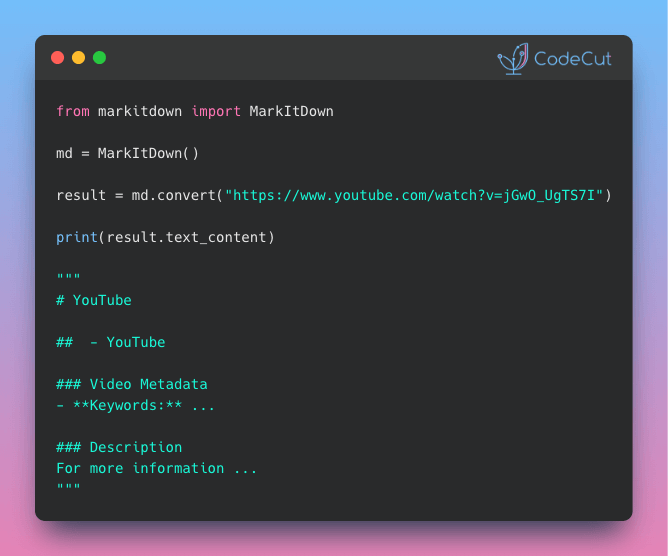
MarkItDown: YouTube Transcripts to Markdown in One Line

Problem
Videos contain rich information that’s difficult to search or analyze programmatically.
Manually transcribing and formatting them into structured text is tedious and error-prone.
Solution
MarkItDown eliminates manual transcription by converting YouTube URLs to structured Markdown automatically.
Key benefits:

Output ready for RAG systems or content summarization
Multi-format support: same API for PDFs, Word docs, Excel, and images
Lightweight with minimal dependencies
Consistent Markdown output across all file types

Build question-answering systems over video content without manual transcription.

📖 View Full Article

🧪 Run code

⭐ View GitHub

UV: Define Conflicting Dependencies in One Project

Problem
What happens when your project needs two incompatible versions of the same package?
Version conflicts are a frequent issue in many projects. A typical solution is to split dependencies across different requirements files or environments, which works but adds ongoing maintenance overhead.
Solution
UV’s conflicts declaration lets you define both versions in one project. Just add a flag to switch between them.
Key benefits:

One pyproject.toml for all configurations
Separate resolution paths in a single lockfile
Flag-based switching between environments
Protection from accidentally installing both

📖 View Full Article

⭐ View GitHub

☕️ Weekly Finds

owl
[LLM]
– Optimized Workforce Learning for General Multi-Agent Assistance in Real-World Task Automation

dexter
[LLM]
– An autonomous agent for deep financial research

bandit
[Python Utils]
– A tool designed to find common security issues in Python code

Looking for a specific tool? Explore 70+ Python tools →

Stay Current with CodeCut

Actionable Python tips, curated for busy data pros. Skim in under 2 minutes, three times a week.

.codecut-subscribe-form .codecut-input {
background: #2F2D2E !important;
border: 1px solid #72BEFA !important;
color: #FFFFFF !important;
}
.codecut-subscribe-form .codecut-input::placeholder {
color: #999999 !important;
}
.codecut-subscribe-form .codecut-subscribe-btn {
background: #72BEFA !important;
color: #2F2D2E !important;
}
.codecut-subscribe-form .codecut-subscribe-btn:hover {
background: #5aa8e8 !important;
}

.codecut-subscribe-form {
max-width: 650px;
display: flex;
flex-direction: column;
gap: 8px;
}
.codecut-input {
-webkit-appearance: none;
-moz-appearance: none;
appearance: none;
background: #FFFFFF;
border-radius: 8px !important;
padding: 8px 12px;
font-family: ‘Comfortaa’, sans-serif !important;
font-size: 14px !important;
color: #333333;
border: none !important;
outline: none;
width: 100%;
box-sizing: border-box;
}
input[type=”email”].codecut-input {
border-radius: 8px !important;
}
.codecut-input::placeholder {
color: #666666;
}
.codecut-email-row {
display: flex;
align-items: stretch;
height: 36px;
gap: 8px;
}
.codecut-email-row .codecut-input {
flex: 1;
}
.codecut-subscribe-btn {
background: #72BEFA;
color: #2F2D2E;
border: none;
border-radius: 8px;
padding: 8px 14px;
font-family: ‘Comfortaa’, sans-serif;
font-size: 14px;
font-weight: 500;
cursor: pointer;
text-decoration: none;
display: flex;
align-items: center;
justify-content: center;
transition: background 0.3s ease;
}
.codecut-subscribe-btn:hover {
background: #5aa8e8;
}
.codecut-subscribe-btn:disabled {
background: #999;
cursor: not-allowed;
}
.codecut-message {
font-family: ‘Comfortaa’, sans-serif;
font-size: 12px;
padding: 8px;
border-radius: 6px;
display: none;
}
.codecut-message.success {
background: #d4edda;
color: #155724;
display: block;
}
@media (max-width: 480px) {
.codecut-email-row {
flex-direction: column;
height: auto;
gap: 8px;
}
.codecut-input {
border-radius: 8px;
height: 36px;
}
.codecut-subscribe-btn {
width: 100%;
text-align: center;
border-radius: 8px;
height: 36px;
}
}

Subscribe

Newsletter #273: MarkItDown: YouTube Transcripts to Markdown in One Line Read More »

Newsletter #272: Split Large Parquet Files Automatically with Polars

📅 Today’s Picks

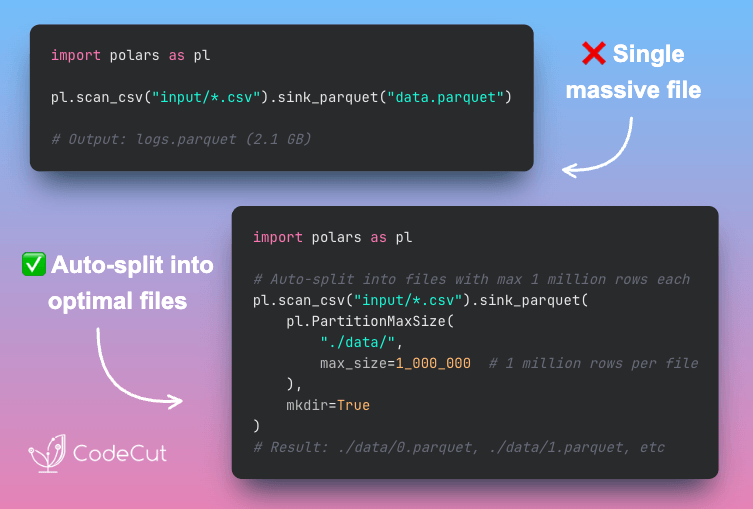
Split Large Parquet Files Automatically with Polars

Problem
When writing large datasets to Parquet, you end up with either one massive file that is slow to read or must manually split data into smaller files.
Solution
With Polars PartitionMaxSize, output is automatically broken into multiple Parquet files according to a defined size limit.
This enables:

Parallel reads across multiple cores
Faster, more reliable cloud storage transfers

📖 View Full Article

🧪 Run code

⭐ View GitHub

Coiled: One Decorator Replaces Your Entire Docker Workflow (Sponsored)

Problem
Have you ever had code work locally but fail on cloud VMs because of missing dependencies or version mismatches?
Docker solves this by freezing dependencies, but introduces friction: Dockerfiles, slow builds, registry pushes, and full redeploys for minor package changes.
Solution
Coiled can remove Docker from the workflow entirely. With a single decorator, it automatically syncs your local environment to the cloud.
Key features:

Exact dependency replication from local to cloud
No need for container builds or registry management
Compatible with pandas, Polars, DuckDB, Dask, and more
Faster deployments through smart caching

📖 View Full Article

🌐 Visit website

☕️ Weekly Finds

crewAI
[LLM]
– Framework for orchestrating role-playing autonomous AI agents that work together to accomplish complex tasks

Ray
[MLOps]
– Unified framework for scaling AI and Python applications from laptop to cluster with distributed runtime and ML libraries

Metabase
[Data Viz]
– Open-source business intelligence tool that lets everyone visualize, analyze, and share data insights

Looking for a specific tool? Explore 70+ Python tools →

Stay Current with CodeCut

Actionable Python tips, curated for busy data pros. Skim in under 2 minutes, three times a week.

.codecut-subscribe-form .codecut-input {
background: #2F2D2E !important;
border: 1px solid #72BEFA !important;
color: #FFFFFF !important;
}
.codecut-subscribe-form .codecut-input::placeholder {
color: #999999 !important;
}
.codecut-subscribe-form .codecut-subscribe-btn {
background: #72BEFA !important;
color: #2F2D2E !important;
}
.codecut-subscribe-form .codecut-subscribe-btn:hover {
background: #5aa8e8 !important;
}

.codecut-subscribe-form {
max-width: 650px;
display: flex;
flex-direction: column;
gap: 8px;
}
.codecut-input {
-webkit-appearance: none;
-moz-appearance: none;
appearance: none;
background: #FFFFFF;
border-radius: 8px !important;
padding: 8px 12px;
font-family: ‘Comfortaa’, sans-serif !important;
font-size: 14px !important;
color: #333333;
border: none !important;
outline: none;
width: 100%;
box-sizing: border-box;
}
input[type=”email”].codecut-input {
border-radius: 8px !important;
}
.codecut-input::placeholder {
color: #666666;
}
.codecut-email-row {
display: flex;
align-items: stretch;
height: 36px;
gap: 8px;
}
.codecut-email-row .codecut-input {
flex: 1;
}
.codecut-subscribe-btn {
background: #72BEFA;
color: #2F2D2E;
border: none;
border-radius: 8px;
padding: 8px 14px;
font-family: ‘Comfortaa’, sans-serif;
font-size: 14px;
font-weight: 500;
cursor: pointer;
text-decoration: none;
display: flex;
align-items: center;
justify-content: center;
transition: background 0.3s ease;
}
.codecut-subscribe-btn:hover {
background: #5aa8e8;
}
.codecut-subscribe-btn:disabled {
background: #999;
cursor: not-allowed;
}
.codecut-message {
font-family: ‘Comfortaa’, sans-serif;
font-size: 12px;
padding: 8px;
border-radius: 6px;
display: none;
}
.codecut-message.success {
background: #d4edda;
color: #155724;
display: block;
}
@media (max-width: 480px) {
.codecut-email-row {
flex-direction: column;
height: auto;
gap: 8px;
}
.codecut-input {
border-radius: 8px;
height: 36px;
}
.codecut-subscribe-btn {
width: 100%;
text-align: center;
border-radius: 8px;
height: 36px;
}
}

Subscribe
Newsletter #272: Split Large Parquet Files Automatically with Polars Read More »

Newsletter #271: Automate LLM Evaluation at Scale with MLflow make_judge()

📅 Today’s Picks

Automate LLM Evaluation at Scale with MLflow make_judge()

Problem
When you ship LLM features without evaluating them, models might hallucinate, violate safety guidelines, or return incorrectly formatted responses.
Manual review doesn’t scale. Reviewers might miss subtle issues when evaluating thousands of outputs, and scoring standards often vary between people.
Solution
MLflow make_judge() applies the same evaluation standards to every output, whether you’re checking 10 or 10,000 responses.
Key capabilities:

Define evaluation criteria once, reuse everywhere
Automatic rationale explaining each judgment
Built-in judges for safety, toxicity, and hallucination detection
Typed outputs that never return unexpected formats

🧪 Run code

⭐ View GitHub

🔄 Worth Revisiting

LangChain v1.0: Auto-Protect Sensitive Data with PIIMiddleware

Problem
User messages often contain sensitive information like emails and phone numbers.
Logging or storing this data without protection creates compliance and security risks.
Solution
LangChain v1.0 introduces PIIMiddleware to automatically protect sensitive data before model processing.
PIIMiddleware supports multiple protection modes:

5 built-in detectors (email, credit card, IP, MAC, URL)
Custom regex for any PII pattern
Replace with [REDACTED], mask as ****1234, or block entirely

📖 View Full Article

🧪 Run code

⭐ View GitHub

☕️ Weekly Finds

litellm
[LLM]
– Python SDK and Proxy Server (AI Gateway) to call 100+ LLM APIs in OpenAI format with cost tracking, guardrails, and logging.

parlant
[LLM]
– LLM agents built for control with behavioral guidelines, ensuring predictable and consistent agent behavior.

GLiNER2
[ML]
– Unified schema-based information extraction for NER, text classification, and structured data parsing in one pass.

Looking for a specific tool? Explore 70+ Python tools →

Stay Current with CodeCut

Actionable Python tips, curated for busy data pros. Skim in under 2 minutes, three times a week.

.codecut-subscribe-form .codecut-input {
background: #2F2D2E !important;
border: 1px solid #72BEFA !important;
color: #FFFFFF !important;
}
.codecut-subscribe-form .codecut-input::placeholder {
color: #999999 !important;
}
.codecut-subscribe-form .codecut-subscribe-btn {
background: #72BEFA !important;
color: #2F2D2E !important;
}
.codecut-subscribe-form .codecut-subscribe-btn:hover {
background: #5aa8e8 !important;
}

.codecut-subscribe-form {
max-width: 650px;
display: flex;
flex-direction: column;
gap: 8px;
}
.codecut-input {
-webkit-appearance: none;
-moz-appearance: none;
appearance: none;
background: #FFFFFF;
border-radius: 8px !important;
padding: 8px 12px;
font-family: ‘Comfortaa’, sans-serif !important;
font-size: 14px !important;
color: #333333;
border: none !important;
outline: none;
width: 100%;
box-sizing: border-box;
}
input[type=”email”].codecut-input {
border-radius: 8px !important;
}
.codecut-input::placeholder {
color: #666666;
}
.codecut-email-row {
display: flex;
align-items: stretch;
height: 36px;
gap: 8px;
}
.codecut-email-row .codecut-input {
flex: 1;
}
.codecut-subscribe-btn {
background: #72BEFA;
color: #2F2D2E;
border: none;
border-radius: 8px;
padding: 8px 14px;
font-family: ‘Comfortaa’, sans-serif;
font-size: 14px;
font-weight: 500;
cursor: pointer;
text-decoration: none;
display: flex;
align-items: center;
justify-content: center;
transition: background 0.3s ease;
}
.codecut-subscribe-btn:hover {
background: #5aa8e8;
}
.codecut-subscribe-btn:disabled {
background: #999;
cursor: not-allowed;
}
.codecut-message {
font-family: ‘Comfortaa’, sans-serif;
font-size: 12px;
padding: 8px;
border-radius: 6px;
display: none;
}
.codecut-message.success {
background: #d4edda;
color: #155724;
display: block;
}
@media (max-width: 480px) {
.codecut-email-row {
flex-direction: column;
height: auto;
gap: 8px;
}
.codecut-input {
border-radius: 8px;
height: 36px;
}
.codecut-subscribe-btn {
width: 100%;
text-align: center;
border-radius: 8px;
height: 36px;
}
}

Subscribe
Newsletter #271: Automate LLM Evaluation at Scale with MLflow make_judge() Read More »

Newsletter #270: PydanticAI: Type-Safe LLM Outputs with Auto-Validation

📅 Today’s Picks

Yellowbrick: Detect Overfitting vs Underfitting Visually

Problem
Hyperparameter tuning requires finding the sweet spot between underfitting (model too simple) and overfitting (model memorizes training data).
You could write the loop, run cross-validation for each value, collect scores, and format the plot yourself. But that’s boilerplate you’ll repeat across projects.
Solution
Yellowbrick is a machine learning visualization library built for exactly this.
Its ValidationCurve shows you what’s working, what’s not, and what to fix next without the boilerplate or inconsistent formatting.
How to read the plot in this example:

Training score (blue) stays high as max_depth increases
Validation score (green) drops after depth 4
The growing gap means the model memorizes training data but fails on new data

Action: Pick max_depth around 3-4 where validation score peaks before the gap widens.

📖 View Full Article

🧪 Run code

⭐ View GitHub

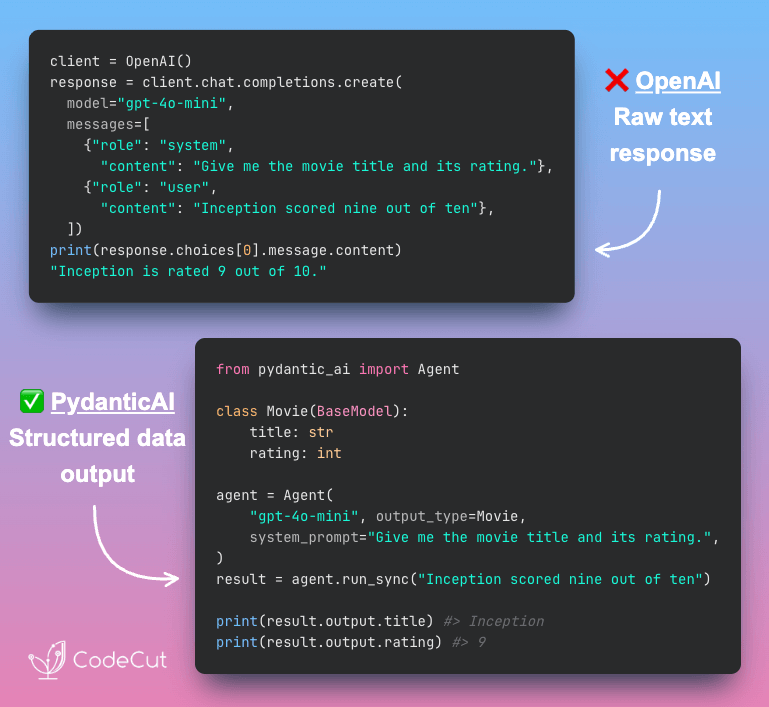
PydanticAI: Type-Safe LLM Outputs with Auto-Validation

Problem
Without structured outputs, you’re working with raw text that might not match your expected format.
Unexpected responses, missing fields, or wrong data types can cause errors that are easy to miss during development.
Solution
PydanticAI uses Pydantic models to automatically validate and structure LLM responses.
Key benefits:

Type safety at runtime with validated Python objects
Automatic retry on validation failures
Direct field access without manual parsing
Integration with existing Pydantic workflows

LangChain works too, but PydanticAI is a lighter alternative when you just need structured outputs.

📖 View Full Article

🧪 Run code

⭐ View GitHub

☕️ Weekly Finds

pdfplumber
[Data Processing]
– Plumb a PDF for detailed information about each char, rectangle, line, et cetera – and easily extract text and tables.

cognee
[LLM]
– Memory for AI Agents in 6 lines of code – transforms data into knowledge graphs for persistent, scalable AI memory.

featuretools
[ML]
– An open source Python library for automated feature engineering from relational and temporal datasets.

Looking for a specific tool? Explore 70+ Python tools →

📚 Top 5 Articles of 2025

A Deep Dive into DuckDB for Data Scientists
– Query billions of rows on your laptop with DuckDB. Learn SQL analytics, Parquet integration, and when to choose DuckDB over pandas.

Top 6 Python Libraries for Visualization: Which One to Use?
– Compare Matplotlib, Seaborn, Plotly, Altair, Bokeh, and PyGWalker. Find the right visualization library for your data science workflow.

Transform Any PDF into Searchable AI Data with Docling
– Extract text, tables, and structure from PDFs for RAG pipelines. Docling handles complex layouts that break traditional parsers.

Narwhals: Unified DataFrame Functions for pandas, Polars, and PySpark
– Write DataFrame code once, run it on pandas, Polars, or PySpark. Narwhals provides a unified API without vendor lock-in.

Goodbye Pip and Poetry. Why UV Might Be All You Need
– Replace pip, virtualenv, pyenv, and Poetry with one tool. UV handles Python versions, dependencies, and reproducible builds in a single workflow.

Stay Current with CodeCut

Actionable Python tips, curated for busy data pros. Skim in under 2 minutes, three times a week.

.codecut-subscribe-form .codecut-input {
background: #2F2D2E !important;
border: 1px solid #72BEFA !important;
color: #FFFFFF !important;
}
.codecut-subscribe-form .codecut-input::placeholder {
color: #999999 !important;
}
.codecut-subscribe-form .codecut-subscribe-btn {
background: #72BEFA !important;
color: #2F2D2E !important;
}
.codecut-subscribe-form .codecut-subscribe-btn:hover {
background: #5aa8e8 !important;
}

.codecut-subscribe-form {
max-width: 650px;
display: flex;
flex-direction: column;
gap: 8px;
}
.codecut-input {
-webkit-appearance: none;
-moz-appearance: none;
appearance: none;
background: #FFFFFF;
border-radius: 8px !important;
padding: 8px 12px;
font-family: ‘Comfortaa’, sans-serif !important;
font-size: 14px !important;
color: #333333;
border: none !important;
outline: none;
width: 100%;
box-sizing: border-box;
}
input[type=”email”].codecut-input {
border-radius: 8px !important;
}
.codecut-input::placeholder {
color: #666666;
}
.codecut-email-row {
display: flex;
align-items: stretch;
height: 36px;
gap: 8px;
}
.codecut-email-row .codecut-input {
flex: 1;
}
.codecut-subscribe-btn {
background: #72BEFA;
color: #2F2D2E;
border: none;
border-radius: 8px;
padding: 8px 14px;
font-family: ‘Comfortaa’, sans-serif;
font-size: 14px;
font-weight: 500;
cursor: pointer;
text-decoration: none;
display: flex;
align-items: center;
justify-content: center;
transition: background 0.3s ease;
}
.codecut-subscribe-btn:hover {
background: #5aa8e8;
}
.codecut-subscribe-btn:disabled {
background: #999;
cursor: not-allowed;
}
.codecut-message {
font-family: ‘Comfortaa’, sans-serif;
font-size: 12px;
padding: 8px;
border-radius: 6px;
display: none;
}
.codecut-message.success {
background: #d4edda;
color: #155724;
display: block;
}
@media (max-width: 480px) {
.codecut-email-row {
flex-direction: column;
height: auto;
gap: 8px;
}
.codecut-input {
border-radius: 8px;
height: 36px;
}
.codecut-subscribe-btn {
width: 100%;
text-align: center;
border-radius: 8px;
height: 36px;
}
}

Subscribe
Newsletter #270: PydanticAI: Type-Safe LLM Outputs with Auto-Validation Read More »

Scroll to Top

Work with Khuyen Tran

Work with Khuyen Tran